

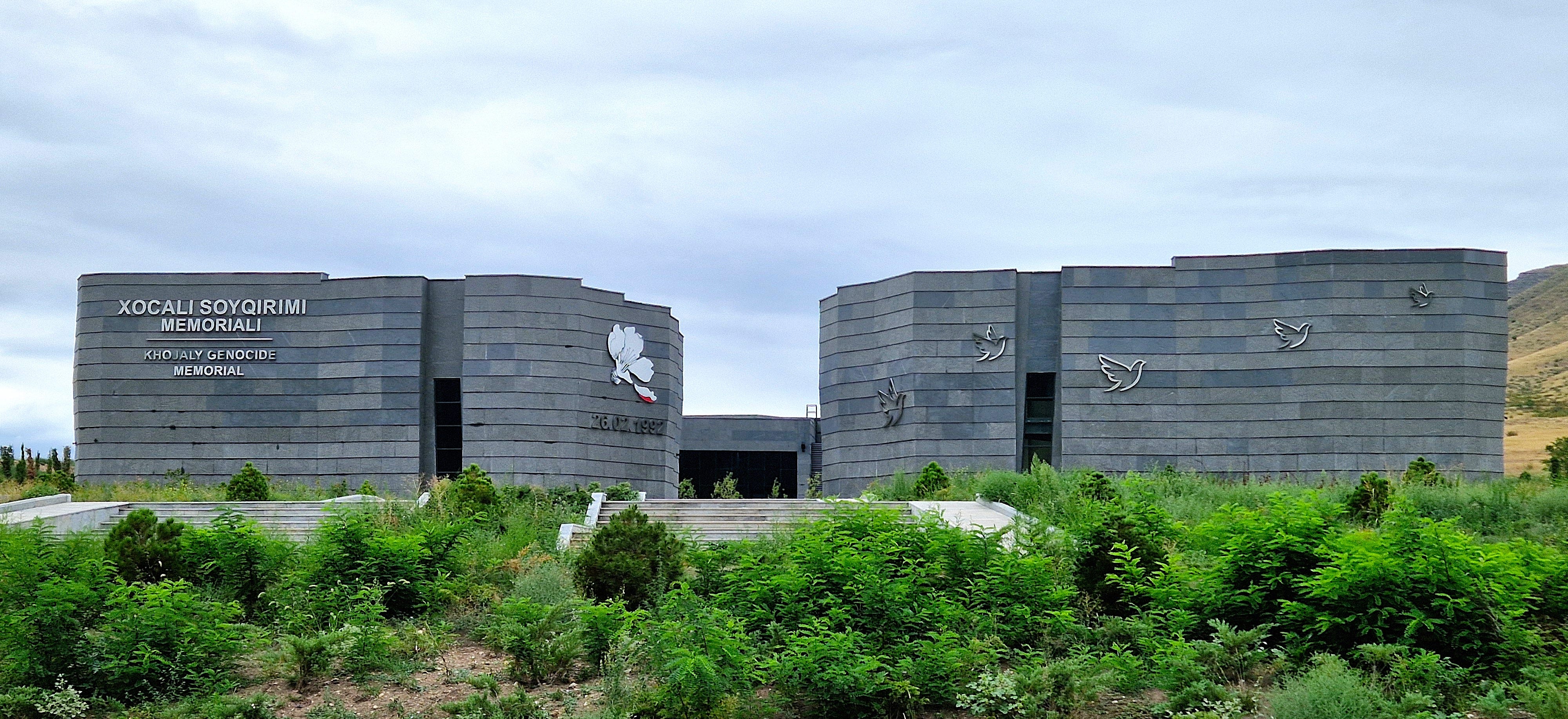
One cannot make a direct crossing from Azerbaijan to Armenia, so when making the trip at the end of August I had to go via Georgia. Driving to the Azeri land border with Georgia, the “Red Bridge”, I passed the Khojaly Genocide Memorial, commemorating an event from February 1992.
To say that something is genocide is implicitly—and usually explicitly—to claim it can withstand a comparison with the Holocaust, the Nazi attempt to exterminate all Jews everywhere solely for their identity. Such is the case with Khojaly, declared genocide by Azerbaijan’s parliament a month after it happened.1 “The Khojaly genocide”, says Baku, “is the gravest crime”, one “against humanity” as a whole, and “does not differ from other horrifying tragedies [such as] Katyn, Lidice, Oradour-sur-Glane, Holocaust, Songmy, Rwanda, and Srebrenica”.
It is either a shocking indictment of man’s inhumanity that this world-historical crime is so little known, or something else is going on here.
The Karabakh Conflict
Azerbaijan says the Khojaly atrocity was perpetrated “in the course of Armenia’s aggressive war against Azerbaijan”, meaning the First Karabakh War (1988-94). The origins of the Karabakh conflict go back to the Soviet Union creating Azerbaijan and Armenia in 1920. The Soviets drew the borders based on the territorial holdings of the Armenian Christians and Turkic-speaking Muslims in the Caucasus, who had used their freedom from Imperial oversight after the 1917 Bolshevik coup to fight a brutal ethno-irredentist war. Fatefully, the Soviets left the Armenian-majority Karabakh in Azerbaijan. Armenians never accepted this and in February 1988, capitalising on Mikhail Gorbachev scaling back the Cheka Terror, they initiated a campaign to revise the borders.
Armenian protests erupted in Yerevan and the Karabakh, and on 22 February 1988 two Karabakh-Azeris were killed at a counter-demonstration. Less than a week later, there was a gruesome Azeri pogrom against Armenians in Sumgait, north of Baku, which killed about thirty people. It was the beginning of four years of escalating inter-communal violence. Armenia began to terrorise and deport its Azeri minority, and Azerbaijan responded in kind, culminating in another anti-Armenian pogrom in Baku in January 1990. Ninety Armenians were killed and the survivors expelled, completing the mutual ethnic cleansing.
In the Karabakh through 1988-89, the Armenian minority was expelled from the main Azeri town of Shusha, and the Azeri minority was expelled from the main Armenian town (and provincial capital) of Stepanakert/Khankendi.2 The Armenian nationalists in power in Yerevan after the summer of 1990 “deniably” infiltrated fedayeen guerrillas into the Karabakh. The Soviets responded with a “pacification” operation in mid-1991, the main effect of which was to further militarise the Karabakh conflict and normalise ethnic cleansing as a method.
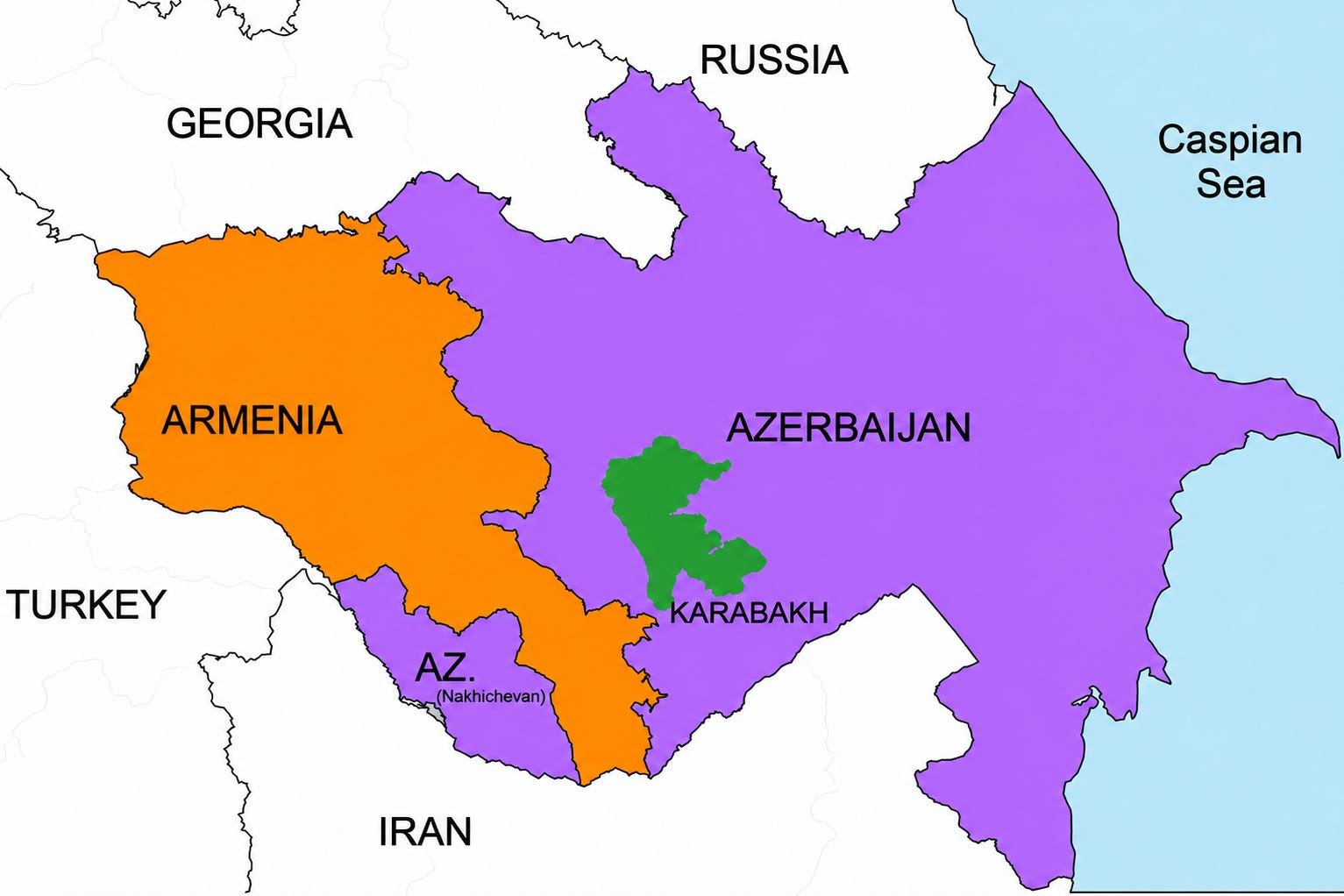
Azerbaijan and Armenia declared independence after the KGB’s failed putsch in August 1991 and the Soviet Union dissolved four months later, creating the enduring legal-political situation where the Karabakh is part of Azerbaijan’s sovereign territory,3 and the conflict is thus formally defined as a domestic rebellion, not an inter-State war. Armenia worked to sustain this fiction by officially disclaiming any involvement in the Karabakh and continuing to operate there (until early 1993) mostly through the fedayeen and other “volunteer” irregulars. Azerbaijan, inheriting even less of a military from the U.S.S.R. than Armenia and being racked by internal political divisions that inhibited the creation of organised armed forces, relied in the Karabakh on its “special police” or OMON and various mafiosos-turned-nationalist warlords.
The demographic mosaic in the Karabakh was seen as a problem by both sides, and both opted for ethnic cleansing to resolve it. The less numerous Karabakh-Azeris (under-25% of the population) were in many small “traps”, their villages surrounded by Armenian settlements from which the fedayeen invaded and forced the Azeris to flee. The Armenians were in one big “trap”, with Stepanakert/Khankendi hemmed in by the major Azeri strongholds.4 Stepanakert/Khankendi was effectively besieged by October 1991. The shelling from the surrounding Azeri positions rendered the town dependent on supplies helicoptered in from Armenia. The immediate context for the Khojaly event was the Armenian attempt to break the siege of Stepanakert/Khankendi.
