

This article was published on my old blog before I started with Substack.
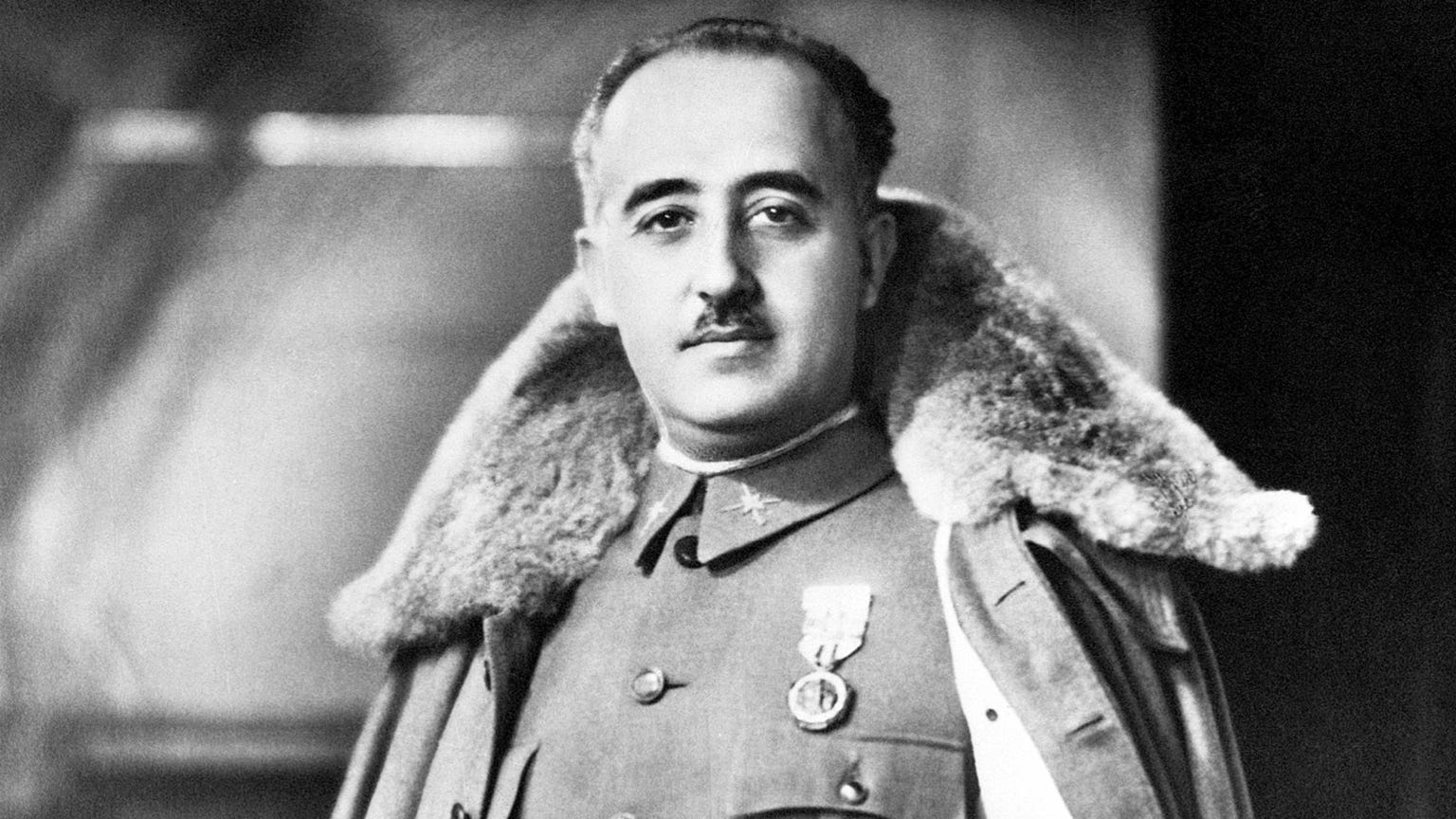
Writing recently about the first meeting between Adolf Hitler and Francisco Franco at Hendaye on 23 October 1940, where the Führer tried to enlist Spain into the Axis, I concluded, drawing on Franco: The Man and His Nation by George Hills, a former BBC journalist and Fellow of the Royal Historical Society:
Franco’s aim at Hendaye was … to avoid a point-blank “no” to Hitler—that way lay invasion and Spain’s subjugation to the Nazis. Rather, … Franco would let stand the idea that he would come into the war on Hitler’s side, but always he would find [in subsequent negotiations about how and when] just one more point in need of clarification before he could materially commit. … [By the late spring of 1941,] Franco had prevailed[.]
Franco’s reasoning was partly ideological. Though quite anti-British by instinct, Franco was a conservative Catholic, who disliked the pagan and revolutionary nature of Nazism, and in 1940 the Nazis were allied to the Soviet Union, the fountainhead of global Communism, to which Franco was unalterably opposed, and Moscow was the power behind the Republicans whom Franco had fought in the then-recent Civil War. (Hitler, in his turn, had utter contempt for the Christian character of Franco’s regime—the high status of priests, the Marian imagery even in the army, and so on—and was deeply disturbed by Franco’s lack of anti-Jewish measures and the March 1940 Anglo-Spanish trade agreement.)
More concretely, Spain was still ravaged by the Civil War, its population yearning for peace; the economy was in tatters; and Franco did not believe the British could be defeated. Among the military officials around Franco, there was an Axis-Allied split in sentiment, meaning he would have to enter the war with a divided regime, not a prospect he relished, and his best Generals were pro-Allied.
To set the table for Hendaye, Franco had begun using Ramón Serrano Súñer, his brother-in-law, a Falangist and overt Nazi sympathiser, to interface with the Nazi government. This was, as Hills put it, applying the lessons Franco learned in Morocco: to defeat the Moors, use the Moors. On the eve of Hendaye, Serrano was appointed Spanish Foreign Minister. The Nazis believed this was a signal of Franco’s allegiance to them, as they were meant to.
The Hendaye meeting itself, it is true, ended in an atmosphere of acrimony: despite the German army at Spain’s gates and Hitler’s not-so-subtle threats to use it to force compliance, over seven hours Franco stonewalled—Hitler told Mussolini afterwards he “would rather have three or four teeth extracted than go through that again”—and the secret protocol signed between the two sides at the end of proceedings in fact said nothing. Franco was committed to entering the war without a timeline, and the Germans were committed to giving Franco parts of French Africa without specifying exactly what. But Franco reassured the Germans afterwards.
Over subsequent months, negotiations to firm-up the timing and terms of Spain’s entry into the war continued, with Franco—through intermediaries and in letters directly to the Führer—expressing giddy enthusiasm to join the Nazi war, while regretfully informing Berlin of various material deficiencies and untoward weather patterns that prevented him doing so quite yet. It is Franco’s words in this period that “would later be used as evidence against him”, as Hills writes, “but his actions did not correspond with his words”.
Franco’s intransigence caused Hitler to shelve the anti-British Operation FELIX in the Mediterranean in December 1940. Into the spring of 1941, Hitler’s messages to Madrid alternated between pleading and threatening, but the German troops menacing Spain were drawn away to Benito Mussolini’s fiasco in the Balkans and preparations for Hitler’s war with Joseph Stalin. Franco had run down the clock and prevailed: Spain would not enter the war on the German side and tacit cooperation with the Allies would grow, notably over the North African campaign at the end of 1942.
The counter-argument—that Franco was pro-Nazi in his heart and eager to join Hitler’s war, but was prevented from doing so by contingencies beyond his control—was probably put most strongly in a paper, “Franco and Hitler: The Myths of Hendaye 1940”, by Paul Preston, one of the pre-eminent English-speaking historians of the Spanish Civil War and Francoist Spain. This post will examine that paper.
A WORD OF CAUTION TO BEGIN
Before getting into the substance of the paper, and what I believe are grave flaws in its arguments, I have to flag up an overarching aspect here, namely the extreme politicisation—even by the standards of modern academia—of this debate.
The root of it goes all the way back to the Spanish Civil War itself (1936-39), where the Republican cause became an issue of moral-political devotion for the Western Left that has few precedents, before or since. This is no accident, as the comrades used to say, since the 1930s was the height of the Western Left’s sympathy for Soviet Communism, and Stalin’s Soviet Union, which exerted a powerful influence over the Republican government before the war, took control of it entirely within months of Franco’s mutiny. The Soviets were, inter alia, significantly responsible for the Europe-wide propaganda campaign that attracted thousands of European volunteers (most famously George Orwell), many of whom were recruited by the KGB’s predecessor and many more had their passports appropriated for use in Soviet agents’ “legends”. The benefits to Moscow’s espionage operations lasted decades.
More broadly, the Soviets instrumentalised Spain for political warfare. Moscow presented the conflict as one of a “democracy” assailed by “fascism”, a narrative made plausible by the Communist-dominated “Popular Front” government having come to power via elections, and the assistance lent to Franco’s Nationalists by Nazi Germany and Fascist Italy, even as such assistance was limited and mainly designed to prolong the war to distract from Hitler’s rearmament and expansionism. As such, the Soviet intervention, ostensibly to support the Spanish government, was portrayed as a practical implementation of the Soviets’ “anti-fascist” commitment, and the neutrality of Britain and France was proof of their “objectively pro-fascist” stance.
The Soviet ability to propagate its myth-image of being the only serious anti-fascist force was a potent factor in converting many idealistic Westerners to Communism and inducing them to spy for the Soviet Union in the period. It did not matter that this was false—that the Soviets spent most of their resources witch-hunting Trotskyists, rather than fighting Franco, and signed a mutual aggression Pact with Hitler months after the Spanish Republic was defeated—and it does not matter for our purposes either.
What does matter is that Soviet disinformation, which has proven so durable on so many issues, did so over Spain. Moscow’s narrative about the nature of the Spanish Civil War remains essentially universal on the Left, and the Left dominates much of Western cultural life, including academia. A lot of the emotional charge remains, too. To contest that the Spanish Civil War was a struggle between a blameless democracy and fascist aggression—one of the disasters of appeasement, a missed opportunity to bar the road to Nazism—and to present Franco as anything but a two-dimensional devil is to invite more than intellectual disagreement. Such historians will be designated “revisionists” and have insinuations, if not explicit claims, made that they are apologists for Franco or the Nazis, or both, and that their work is political advocacy masquerading as scholarship.
One can see this in the contrasting receptions of the late Hugh Thomas, Baron Thomas of Swynnerton indeed, and Stanley G. Payne, both leading scholars whose contributions rank alongside Preston’s. Thomas never disguised his Left-wing views: he was a member of the British Labour Party. It also turned out Thomas’ major book on the Civil War was produced with some prodding and publication assistance from a Soviet spy, James MacGibbon. Thomas is regarded as an unproblematic giant in the field. Payne, an American historian of Spain and European fascism, has never been an overt political activist in the way Thomas was, but is clearly more conservative in temperament, thus he takes a more critical view of the Communist side in the Civil War. Payne is not without admirers, in the profession and beyond, but no mainstream write-up mentioning him fails to point out that his conclusions are “heterodox”, and in both academia and the media there have been intemperate charges that he is “pro-Franco” and the rest of it.
To say Preston is on the Thomas side of this divide is not meant to denigrate him. My own views align more closely with Payne’s, and that is relevant, too. History is not like Science, where there is a methodological expectation—however often it is disappointed—of measurement and experimentation, and repetition, leading to propositions being proven or disproven by evidence that often speaks for itself. In the historical field, the traces left of what happened are fragmentary and events cannot be replayed. Interpreting evidence, even what counts as evidence, is contestable in history, and unarguable “right” answers are comparatively rare; conclusions are a matter of probability. This does not mean history is a realm of total epistemological relativism, but there is a lot more scope for subjectivity to influence results, however much we all try to control for our biases. It is for readers to decide how they factor this into their assessment of the below.
PRESTON’S BROAD THESIS
Preston begins his article forcefully by writing that the “idea that Franco … hoodwinked Hitler and kept Spain out of the Second World War is a central myth of Francoist propaganda”. Preston argues that Franco provided various forms of assistance to the Nazi government, and was “still nurturing secret hopes” of Hitler “turning the tide” in the “final days” of the war. The “devotion of the [Franco-controlled] Spanish press to the Axis cause” abruptly shifted after the fall of Berlin, Preston argues, and began to focus on the Caudillo’s “astute caution” in defying the Führer’s demand he join the Axis.
The motive of this about-face, Preston contends, was to position Franco advantageously for the new world after Hitler’s defeat, and this turned out to be “easier than even Franco, the eternal optimist, had anticipated” because the realisation of the Cold War was soon to set in and the NATO powers were “anxious to incorporate Franco into the anti-Communist front”. This is the lens through which Preston interprets the speech made in the House of Commons on 24 May 1944 by British Prime Minister Winston Churchill.
Churchill said in May 1944 that, while the British ambassador in Madrid had played his part, “the main credit [for Spain not joining the Axis] is undoubtedly due to the Spanish [i.e., Franco’s] resolve to keep out of the war”. If Franco went over to Hitler in late 1940, Churchill said, it would have made the Mediterranean a “nesting place of German U-boats”, cutting off access to vital strategic locations and resources necessary for the anti-Hitler war. Instead, Franco resisted “German blandishments and pressure” to join the Nazi war at “the critical moment”, said Churchill, and when “Spain’s power to injure us was at its very highest”—during preparations for Operation TORCH in North Africa in November 1942—“the Spaniards continued [to be] absolutely friendly and tranquil. They asked no questions, they raised no inconveniences.” Churchill concluded: “I shall always consider a service was rendered at this time by Spain, not only to the United Kingdom and to the British Empire and Commonwealth, but to the cause of the United Nations.”
Preston argues that Churchill was not giving an honest accounting of his experience in dealing with General Franco, but was instead motivated by political and strategic interests, one short-term (“to neutralise Spain during the forthcoming Normandy landings”) and one longer-term (“sanitising Franco in order to be able to use him as a future bulwark of Western Mediterranean policy”).
“Second only to Churchill’s contribution to Franco’s efforts to rewrite history was that made by the United Press”, writes Preston. Franco gave an interview to the Director of the United Press Foreign Service, A. L. Bradford, which was published on 7 November 1944. “Massive world-wide publicity was given … to the Caudillo’s claim to have been the Allies’ secret friend throughout the war”, writes Preston. “The sympathy with which Franco’s declarations were treated was not unconnected with the fact that, at the same time, the official Spanish news agency EFE negotiated a contract with the United Press for its services in Spain.”
At this point, I will just note that even if one accepts Preston’s contention that Franco’s “declarations were a disingenuous, not to say entirely mendacious, account of his policy during the previous five years”, the argument that a “delirious Spanish press” went wall-to-wall in covering “the ‘transcendental importance’ of Franco’s [pro-Allied] remarks” in November 1944 is in some tension with Preston’s argument about the pro-Nazi “devotion” of the Francoist media up to the demise of the Hitler regime in May 1945.
After this interview, “Franco’s services to Spain and the Allies as the man who held back the Nazi hordes became a constant refrain of his propaganda”, says Preston, and “the central plank in the construction of that image was his one direct confrontation with the Führer, at Hendaye”. “The rewriters of Hendaye”, as Preston calls them, tell a story of Franco “brilliantly” keeping “a threatening Hitler at arm’s length”, and this has “derived plausibility from the indisputable fact that Franco did not go to war” But, Preston argues:
an examination of the encounter [at Hendaye] does nothing to suggest inordinate pressure for Spanish belligerence on the part of Hitler. Nor does it diminish the conclusion that Franco remained as anxious in the autumn of 1940 as he had been in the early summer, to be part of a future Axis world order. Hitler went to the south of France in order to weigh up the respective costs of securing the collaboration in his European block of Vichy France and of Franco’s Spain. … Franco went to Hendaye in order to derive profit from what he saw as the demise of the Anglo-French hegemony which had kept Spain in a subordinate position for over two centuries. The Hendaye meeting failed because Hitler believed that Vichy offered the better deal.
PREPARATIONS FOR HENDAYE
Even within Preston’s own argument, where “the Caudillo’s warlike fervour” was at a high pitch into the summer of 1940, he acknowledges that this had already “dimmed somewhat” by the time Serrano was in Berlin on 16 September. This was for three reasons, says Preston. First, the Germans were “dismissive of his territorial aspirations”. Second, “the Caudillo’s slowly dawning cognizance of the strength of British resistance”, and the possibility of a British “retaliatory strike against Spain or her overseas territories”. It was understood that letting the Nazis take Gibraltar would likely mean the British taking the Azores, the Cape Verde Islands, and/or the Canary Islands, the latter of which Hitler wanted for a German base, as he did bases at Agadir and Mogador with “appropriate hinterland”. By this time, says Preston, Franco seems to have become aware of the shelving of Operation SEA LION—the German plan to conquer Britain—on 17 September, and at all events “certainly seems to have had evidence that it was now going to be a long war” that he did not want to enter too early. This was because, third, “the decisive obstacle to precipitate warlike action was the rapid deterioration of Spain’s economic position”.
Elsewhere Preston writes:
Franco aspired to take part in the war but, aware of Spain’s economic weakness, only after the worst of the fighting was over, albeit before the division of the spoils. In the consequent hesitations, there was therefore both prudence and caution. What cannot be discerned is the perspicacity on the part of the Caudillo to act as the ‘secret ally’ of the democracies. That is not to say that he was not starting to hedge his bets in October 1940. … Rather than any divinely inspired foresight, two other factors imposed inaction on Franco. On the one hand, the economic and military weakness of Spain, and the power of the Allies to control her food and fuel supplies[.]
This is all of a piece with the architecture of Preston’s core argument that, on the one hand, Hitler never really wanted Franco’s Spain to join the war, certainly not at the cost of alienating Vichy France and potentially losing control of the French North African colonies. After the fall of Paris, each of the overseas colonies had to decide whether to side with Vichy (which most did) or join the Free French: if Hitler promised parts of French Africa to Franco, the local administrations might rebel or at least be less inclined to defend themselves, as Dakar in Senegal had done, from an Allied intrusion, says Preston. On the other hand, Preston believes Franco was keen to join the Nazi war, and to be part of the victorious Axis—but, aware of his own weaknesses, only once the bulk of the fighting was over. From this perspective, Preston sees Franco’s delaying tactics with Hitler not as motivated by a “determination … to hold on to neutrality but to get the [political] basis of a colonial empire”.
But let us not get ahead of ourselves. The elements of this core argument and the detailed factors here will be dealt with as we go through this. The key aspect is Preston agreeing that Franco arrived at Hendaye not wanting to enter the war for solid reasons of self-interest, something to bear in mind when looking at some of Preston’s other claims.
Preston draws attention to the fact Serrano and Nazi Foreign Minister Joachim von Ribbentrop “quickly developed an intense mutual dislike” at the September 1940 meeting because of Ribbentrop’s high-handedness in treating Serrano, who “had come expecting to be treated as a valued ally”, like “the representative of a satellite state”. Preston perhaps overdoes it in saying, “this was to have great significance in terms of Spain’s ultimate neutrality”. Franco was the ultimate decision-maker. Nonetheless, if one sees Franco as trying to navigate a path to defying the Germans without provoking the destruction of his country, it was surely helpful to the conduct of Spanish policy that the Nazis’ man in Madrid soured on the Nazis so early on in this process.
Preston is clearly aware that not everything said in a diplomatic setting is meant to be taken literally. For instance, Serrano, in addition to registering Spain’s claims to “all of French Morocco, which ‘belonged to Spain’s Lebensraum’, and the area around Oran inhabited by Spaniards”, had said to Ribbentrop that Spain believed “Portugal really had no right to exist” and was determined to add that country to its territorial gains. Preston notes these remarks about Portugal were probably said “in an attempt to establish Spain’s credentials as a ruthless member of the Axis club”. Yet when it comes to Franco’s letters to Serrano while he was in Berlin—to reiterate, letters to a man who had been sent because he was known on all sides to be a genuine devotee of the regime Franco was hoping to gain the trust of—Preston takes them entirely at face value. “The idea that it was Serrano Suñer who was the pro-Axis warmonger and Franco the careful pacifist is demolished by the letters”, says Preston [italics added].
This is all the more striking since, while Preston argues the letters show “Franco not only believed blindly in the victory of the Axis but he was fully decided to join in the war at its side”, he then notes that the letters display “doubts” about “the material conditions for Spanish preparation and future prizes”. Indeed, while Franco’s letters have a “tone … of wide-eyed adulation of Hitler” and blame “the Führer’s underlings” for the impasse over terms—which one might regard as exactly the way to frame things with Serrano—the letters are “adamant … about the need for adequate economic and military preparation”, show a studious concern with (direct quote from Franco) “the specific details of the agreement and the obligations to be undertaken by both parties”, and an insistence that any Spanish Pact with the Axis be kept secret, allegedly until Spain is ready for war. Steering the discussion into minutiae of the terms on which Spain will enter the war does not seem like the actions of someone “fully decided to join in the war”.
That Franco had other purposes in signing a secret pact with Hitler than a desire to join the Axis is documented by Preston himself:
[O]pposition was building up within the higher reaches of the Spanish army to entry into the war … and … the population would not tolerate more sacrifices. With tensions brewing between monarchists and Falangists, as a compromise solution, Franco latched onto the idea of the secret protocol with the Axis, which he hoped would guarantee his territorial ambitions yet still leave the precise date of Spanish entry to him.”
Then there is Franco’s cabinet reorganisation on 16 October 1940: Luis Alarcón de la Lastra was replaced as Minister of Industry and Commerce by the Falangist businessman Demetrio Carceller Segura, and Colonel Juan Beigbeder was replaced as Foreign Minister by Serrano. Here, says Preston, “Franco’s continued fervour for the Third Reich was revealed dramatically in the removal of the two most pro-Allied ministers”. Even Mussolini agreed! Franco’s reshuffle “affords us assurance that the tendencies hostile to the Axis are eliminated or at least neutralised [in Spain]”, Il Duce wrote to Hitler on 19 October.
Mussolini being part of the intended audience for this manoeuvre does not seem to trouble Preston, nor the fact—never mentioned in the article—that once Franco was out of the woods, with the Germans bogged down in the East in 1942, he purged the Falangists root and branch from the government. Parsimony or Occam’s razor is a crucial tool in assessing historical evidence, but when invoked in service of this kind of decontextualised documentary literalism, it borders at best on the naïve.
THE HENDAYE MEETING
On this point of documentary evidence, Preston summarises the state of play for Hendaye:
An entirely accurate, minutely detailed, reconstruction of the Hendaye meeting is impossible despite the existence of several ostensibly eye-witness accounts. Six people were present; Hitler, Franco, Ribbentrop, Serrano Suñer, and the two interpreters. A seventh, Paul Schmidt of Ribbentrop’s staff, was hovering in the background. Four of the seven, Serrano Suñer, the Baron de las Torres, Luis Alvarez de Estrada y Luque (the Spanish interpreter), Ribbentrop and Schmidt, have left accounts of varying degrees of detail. The fullest version is contained in the German Foreign Office record, which is inexplicably incomplete (just as other documents concerning the relations between Hitler and Franco are inexplicably missing). The account is plausibly attributed in the German documents to Paul Schmidt, who was certainly among the German party at Hendaye.
“Despite the creation of the myth of Franco gallantly holding out against the threats of the Führer, Hitler had not in fact come to demand of Franco that Spain go to war immediately”, writes Preston. “Indeed, there was more of an exploratory element to his journey.” Preston notes that Hitler had met the Vichy Deputy Prime Minister Pierre Laval on 22 October at Montoire-sur-Loire, and was meeting with the Vichy “Chief of State” Philippe Pétain on 24 October, also at Montoire. Considerations between Spain and Vichy were heightened for Hitler at this moment, says Preston, because of Mussolini’s impending attack on Greece, about which the Führer was anxious, understanding the likelihood that German troops would soon be drawn east into the Balkans, leaving the local administrators of Axis territory in the western Mediterranean responsible for their own defence should the Allies try to capitalise by striking there. Vichy had proven itself at Dakar; there were serious doubts Spain could militarily defend North Africa, even if giving parts of French Africa to Madrid did not trigger a political crisis (which it probably would). Preston sometimes seems to suggest Franco was oblivious to this dynamic, and more firmly contends that the Caudillo had such “hopes” in the Führer that he attributed any knottiness in relations to troublesome German “underlings”.
We shall explore below the argument that Hitler did not seriously want Franco to enter the war at the time of Hendaye. For now, let us look at the Africa dimension and Franco’s view of Hitler.
Preston’s argument significantly hinges on the idea that Hitler simply did not value Spain that much, full stop, and certainly did not value it enough to alienate Vichy by paying Franco’s price for entry into the war of handing over chunks of French Africa—all of French Morocco, Oran (in Algeria), and much of Equatorial Guinea—to Spain. (It is within this framework that Preston argues Hitler never seriously pressured Franco into joining the war; more on that later). It is Preston’s view that Franco’s “astonishing mixture of naivety and greed” was the motive for his earnest demands over Africa, and the Caudillo was “taken aback” when it dawned on him the underlings truly spoke for Hitler. The evidence, however, permits of another interpretation: that Franco knew full well “it was a foregone conclusion that Hitler would not grant these demands”, and that is why they were made. Franco had told one of the officers with him on the way to Hendaye, “This is the most important meeting of my life. I’ll have to use every trick I can”. If the request for African colonies was one of these tricks, much of Preston’s thesis falls to pieces.
What is most obviously dubious is how much stress Preston lays on Franco’s if-only-the-Tsar-knew views of the difficulties with Hitler. For one thing, such views were expressed to Serrano; the Caudillo was not going to put it any other way to him. And for another, whether Franco seriously expected to be granted African colonies or not, Hitler had been moving on the Africa Question—an indication that the Führer really did want and value rapid Spanish entry into the war. As Preston documents, “inclining to resolve the contradictions between Spanish ambitions and French sensibilities by offering the French British territory in Nigeria in return for their granting part of Morocco to Spain.” The Führer’s sequencing of Gibraltar and Suez was clear enough—Britain would conquer the Canary Islands if Gibraltar was hit first—but Preston is oddly partial to the idea that the Nazis could have taken Gibraltar, which they really wanted to do, without Franco’s cooperation. Preston asserts unvarnished: “Hitler believed that an attack on Gibraltar was feasible without Spanish agreement.” This runs counter to all the evidence we have.
It is slightly to pre-empt some of the issues below, but the exasperated letter Hitler wrote to Franco in early February 1941 not only demonstrates that Franco’s cooperation over Gibraltar was absolutely necessary for the Nazis—Hitler complains about Franco refusing permission for German troops to land in Spain for a strike at Gibraltar a month earlier—but it gives a sense of Franco’s behaviour in the wake of Hendaye:
When I had the request made to you [over Gibraltar], Caudillo, with the impression of urgency to bring relief to the Italian ally and to set this date in the middle or the end of January, that is, to permit the German march against Gibraltar to begin on or after January 10, in order to start attacking at the end of January, then for the first time our negotiators were unequivocally informed that such an early date could absolutely not be considered and this was again motivated by economic factors. However, when I thereupon let it be known again that Germany was indeed ready to begin at once with deliveries of grain, Admiral Canaris received the conclusive information that this delivery of grain would not be decisive at all, for via railway, it certainly could accomplish no practical effect. It was now further declared that since we had already made available batteries for the Canary Islands and moreover intended also to provide divebombers for additional security—even that was not decisive, since the Canary Islands from the point of view of food could no longer be held after six months.
That it is absolutely not a matter of economic factors but rather of others is apparent from the last statement in which it is stated that for climatic reasons to march in this season could not succeed, but on the contrary should only be considered at the earliest in the autumn or winter.
Under these conditions, of course, I do not understand why one should first want to declare an event impossible on economic grounds, which is now said to be impossible simply for climatic reasons. Now I do not believe that the German Army would be disturbed during its march in January by a climate which in itself is nothing out of the ordinary for us. … I regret most profoundly, Caudillo, this your opinion and your stand … The attack on Gibraltar and the closing of the Straits would have changed the Mediterranean situation in one stroke. … [I]f we had been able to cross the Spanish border with the first formations [on 10 January], Gibraltar would today be in our hands. … Two months have been lost, which otherwise would have helped to decide world history.
What one can see there is the way Franco, without ever directly saying “no” to Hitler, found one niggling excuse after another to avoid being entangled in Nazi operations against the Allies—and that Berlin was quite well aware of what was happening, but by this point was in no position to compel Franco’s compliance or replace him.
This does not square very well with Preston’s contention that Franco “preferred to cling to the consoling idea that the Führer’s vision, understanding, and generosity were being undermined by the meanness of his subordinates”, nor Preston’s belief that Franco’s “attitude to Hitler” was a “remarkable combination of provincial mediocrity and a complacency bordering on megalomania”. One could argue these judgments say more about Preston.
In a similar vein, Preston points to the “[s]ubstantial photographic evidence” of the Hendaye meeting, says it shows “Franco was thrilled to be meeting the Führer”, and, therefore, “belie[s] the view that Franco was skilfully deceiving Hitler. … The dewy-eyed look reflected in the photographs is not one which is easily simulated, particularly for as cold a fish as Franco.” This is, as they say, one view.
Or take the threat Hitler made to Franco at Hendaye: “I am the master of Europe, and, as I have 200 divisions at my orders, there is no alternative but to obey.” Preston agrees that this is recorded in the German documents, but then directs attention to Hitler saying at the end of the meeting, according to De las Torres, “with these fellows [or this fellow], there is nothing to be done”. “Clearly, had Hitler seriously been threatening to use 200 divisions against Spain, he would hardly have made a remark so redolent of impotence”, writes Preston. The leap of logic there is so extreme one simply does not know what to do with it.
It might be added that at the end of the February 1941 letter quoted above, after complaining about Franco’s foot-dragging, Hitler slyly threatened Franco again in similar terms: “[T]he mightiest military machine in the world stands ready for every additional task which may be put to it to solve. And how good and reliable this instrument is, the future will prove.”
Preston gives this snapshot of the Hendaye meeting:
[Franco spoke] in a monotonous sing-song voice, with a recital of the history of Spanish claims in Morocco, the current appalling conditions in Spain, a list of supplies required to facilitate her military preparations and a pompous assertion that Spain could take Gibraltar alone. Hitler was driven to distraction by Franco’s insistent, droning voice and his relentless imperturbability. He was especially infuriated when Franco repeated an opinion which he acquired from his naval attaché in Rome, Captain Alvaro Espinosa de los Monteros, to the effect that, even if England were conquered, the British government and fleet would continue to fight the war from Canada with American support. The Führer jumped nervously to his feet, barking that there was no point in further discussion.
A factual point first: it is not clear Franco “acquired” his view Britain was unbeatable from anybody. Franco had told his Generals before Hendaye: “The English will never give in. They’ll fight, and go on fighting, and if they are driven out of Britain they’ll carry on the fight from Canada. They’ll get the Americans to come in with them.” There was no disagreement. This was a view broadly shared by the officers at the helm in Spain, all of whom were capable of independent military assessments. If there was an extrinsic influence on Franco it came not from his own elite but from within the fractious Nazi government.
In July 1940, as part of the preparatory work for Operation FELIX, the German plan to occupy Gibraltar and close the Straits to block British entry to the Mediterranean from the west, Hitler sent Admiral Wilhelm Canaris, the head of German military-intelligence (Abwehr), to Madrid to sound out Franco. Canaris seemed ideal to win Franco over: an expert on Spain, having served there as an intelligence operative in the First World War and the Spanish Civil War, and someone Franco trusted. Unfortunately for Hitler, Canaris had defected from the Nazi cause after the obliteration of Poland and worked to sabotage the Nazis’ aggressive designs from within until his treason was detected and he was hanged in April 1945. What Canaris told Franco was that Germany could not win the war and Spain getting in would be a disaster. Interestingly, Canaris advised his old friend to avoid defying Hitler directly (“look at Norway”), and instead to appear cooperative by “giving way on points that don’t really matter” while holding out on fundamentals (“look on the other hand at Sweden”). Canaris specifically suggested Franco make impossible demands, notably for weaponry he knew Germany did not have.
For our purposes, the notable thing here is less where or how Franco came by the view Germany could not defeat Britain than the fact he held this view before he arrived at Hendaye: Franco would never have said such a thing directly to Hitler if he did not believe it. Preston agrees. How, then, to make this compatible with Preston’s repeated claims that Franco believed—and wished—the Axis would win the war? “By September 1940,” writes Preston, Franco was “[c]onfident of an early German victory over Britain”. Later Preston writes: “[U]ntil near the end of the war, Franco hardly ever wavered in his conviction that the ultimate victor would be the Third Reich.” And once more: “In the final days of the Second World War, Franco was still nurturing secret hopes of Hitler’s wonder weapons turning the tide in favour of the Third Reich, believing that Nazi scientists had harnessed the power of cosmic rays.” It is a contradiction Preston does not even seem to be aware he is caught in.
To Preston’s sketch of the Hendaye meeting: perhaps some will agree with Preston that this demonstrates Franco went to Hendaye “naively convinced that Hitler, his friend, would be generous” and the monologue was meant to “overwhelm” Hitler into seeing things Franco’s way.
At least as plausible a reading of this is that Franco’s historical talk and list of requirements was formulated precisely to be an impossible list of demands. Moreover, even if Franco was the “provincial mediocrity” Preston says he was, it is difficult to believe that after all the preparation that went into the meeting, and the facts known to any child about Hitler’s character, that Franco could have spoken of the impossibility of Hitler’s victory over Britain even if he conquered the Island without knowing the reaction it would provoke—and the fact he did it anyway suggests rather strongly there was nothing “dewy-eyed” or unintentional about how Hendaye turned out from Franco’s perspective.
Preston just cannot break out of his tunnel vision on this point, though. Recording that, at the end of the meeting, Franco said to Hitler, “Despite what I’ve said, if the day ever arrived when Germany really needed me, she would have me unconditionally at her side without any demands on my part”, Preston writes that this “revealed [Franco’s] emotional commitment to the Axis”. Preston himself follows this by noting that the “German interpreter did not translate what he took to be merely a formal courtesy”, and understandably. It was obviously a rhetorical flourish, the kind of thing people say at summit conferences, and when they get carried away by the melodrama of what Preston calls “an intensely historic moment”.
In terms of the secret protocol signed at the end of the meeting, Preston is eager to emphasise that it “constituted a formal undertaking by Spain to join the war on the Axis side”, neglecting his own recognition of the protocol’s “vagueness” and the fact its terms were “not converted into tightly binding contractual commitments”. Most importantly, Preston writes: “The protocol was signed, committing Spain to join the Axis cause at a date to be decided by ‘common agreement of the three Powers’ [Germany, Italy, Spain] but after military preparations were complete. This effectively left the decision with Franco” [italics added]. Preston never dwells on what it means that Franco, for all his words of “emotional commitment to the Axis”, singularly failed to take the decision to join the Axis when it was in his hands.
POST-HENDAYE
After the Hendaye meeting, Franco said to Serrano:
These people are intolerable. They want us to come into the war in exchange for nothing. We cannot trust them if they do not undertake, in whatever we sign, a binding, formal contract to grant to us now those territories which I have explained to them are ours by right. Otherwise, we will not enter the war now. This new sacrifice of ours would only be justified if they reciprocated with what would become the basis of our Empire. After the victory, despite what they say, if they do not make a formal commitment now, they will give us nothing.
For Preston, this is proof that Franco wanted to get into the Axis war, he was just haggling over terms, and since Hitler would not meet them “neutrality became a kind of consolation prize.” Again, taken in isolation that is a plain enough reading. In context—speaking to the waveringly pro-Nazi Serrano, wishing to push him into seeing that going all-in with the Nazis would be a mistake, with the pact meant partly to provide paper promises of imperial gains to settle things down between the monarchists and Falangists—more emphasis might be laid on Franco finding the Nazi leadership “intolerable”.
From the German side, Preston records the following reactions:
Joseph Goebbels wrote in his diary of the Hendaye talks: “The Führer has now had his projected meeting with Franco. I am informed by telephone that everything went smoothly. According to the information, Spain is firmly ours. Churchill is in for a bad time.”
On the drive away from Hendaye, Ribbentrop “cursed Serrano Suñer as a ‘Jesuit’ and Franco as an ‘ungrateful coward’.”
Ribbentrop “wrote with some exasperation on 25 October to the German Ambassador in Rome, [Hans Georg von] Mackensen, about the difficulties encountered at Hendaye. He summed them up succinctly when he said, ‘The Spanish Foreign Minister nevertheless frequently revealed a lack of sufficient understanding for the fact that the realization of the Spanish aspirations depends exclusively on the military successes of the Axis Powers and that therefore these aspirations must be subordinated to the Axis policy of attaining final victory’. He complained of the Spaniards’ failure to see that they would have great difficulty fighting off a combination of the British and [the leader of the Free French Charles] de Gaulle in Africa.”
Ribbentrop “telephoned [Italian Foreign Minister Galeazzo] Ciano and expressed satisfaction with the meeting.”
Hitler’s remark to Mussolini about preferring to have teeth pulled than talk to Franco again.
“According to Field-Marshal [Wilhelm] Keitel, who spoke briefly to Hitler during the dinner break, ‘he was very dissatisfied with the Spaniards’ attitude and was all for breaking off the talks there and then. He was very irritated with Franco, and particularly annoyed about the role played by Suñer, his Foreign Secretary; Suñer, claimed Hitler, had Franco in his pocket. In any event, the final result was very poor’.
“Colonel Gerhard Engel, Hitler’s Army Adjutant, reported to [German chief of staff Franz] Halder that the Führer was dissatisfied with the Hendaye meeting, ranting about ‘Jesuit swine’ and ‘misplaced Spanish pride’.”
Preston surveys this, and remarks of the Goebbels quote and Ribbentrop’s message to Ciano: “Both of these comments are entirely consistent with the fact that Hitler had been on something of a reconnaissance trip to compare the stances of Franco and Pétain. It was only later that he would come to regard the meeting as an outright failure.” Those two comments, one of them from a man (Goebbels) incapable of seeing Hitler as in error and one to a foreign ambassador, might well be consistent with such an interpretation, but what about the other five—all of them contemporaneous, private, and from the officials, Hitler and Ribbentrop, who actually led at Hendaye? “[T]hat is not to say that [Hitler] had enjoyed the encounter” is Preston’s only reference to them. There is a degree of selectivity here that is indefensible.
At least in this case one can see the selectivity at work. The problem recurs in a somewhat more egregious way with Preston, one passing reference to Franco writing “an enthusiastic letter to Hitler on 30 October [1940]” notwithstanding, omitting the letter correspondence between the Caudillo and the Führer that continued into 1941. This might be defensible in a paper that was tightly focused on Hendaye, but Preston writes in some detail about events up to 1945 and includes significant commentary about events long after that in his discussion of how Hendaye was used in official Francoist historiography and media. It is difficult to think of a reason for Preston’s decision on this front, except that the letters—as quoted above—are devastating to his thesis that Hitler never seriously wanted or tried to pressure Franco into joining the war in late 1940 and early 1941.
It could be argued that the Franco-Hitler letters are tricky sources, and this is true. When Hitler was writing directly to Franco and vice versa, a formal friendliness had to be maintained, and there is a certain amount of reading between the lines involved in deciphering them. This could be a reason to omit the letters, though that should probably be explained. There is less reason to omit documents where such considerations are absent.
In the order for Operation FELIX, Führer Directive 18, issued three weeks after Hendaye on 12 November 1940, Hitler states that the operation hinges on “Spain’s imminent entry into the war” (or “Spain’s entry into the war in the near future”). The Directive said “political measures” to bring this about were already underway, and so they were.
The Germans were working through various channels to coordinate with Spain for an attack on Gibraltar that Berlin believed would begin soon after Christmas 1940. But the Caudillo kept raising nagging problems that meant things were falling behind schedule, so Hitler sent Canaris back to Madrid on 7 December 1940 for “what he hoped would be final negotiations for Spain’s entry into the war”, with instructions to press Franco “in the most forceful possible manner” to agree to the “earliest possible deadline” to join the Axis: “Exactly what Canaris told the Spaniards will probably never be known”, but “Canaris had been warning Franco for many months” against joining the Führer and evidently did so again. Canaris delivered to Hitler his “final report of Franco’s stubborn ‘no’.” Hitler put FELIX on hold on 11 December and turned his attention East, issuing Führer Directive 21 on 18 December to begin intensive preparations for the invasion of the Soviet Union.
The story told in the documents and the sequence of events is crystal clear: Hitler urgently wanted Franco to join in the war no later than January 1941, even trying as far as he was able to coerce the Caudillo, and failed because Franco refused. Hitler’s bitterness at Franco over this, reflected in the documentary trail from the months afterward, tells the same story.
Hitler wrote a series of letters to Mussolini, saying the following:
31 December 1940: Enraged by Franco’s actions that had caused the cancellation of the FELIX operation, Hitler said Franco “refuses to collaborate with the Axis powers”. Hitler believed Franco’s “avoidance of the conflict” was due to his over-warm relations with “the Democracies”, specifically economic ties related to food.
28 February 1941: “I take for granted that his [Franco’s] explanations mean that Spain does not want to enter the war either now or later. This is most annoying since we are thus deprived of easier ways to attack Great Britain in her Mediterranean possessions. … [T]he Spanish desertion is also deplorable because it eliminates the best opportunity of finishing once for all with the political unreliability of France” [italics added].
16 February 1943: “Should the Spanish Government have been ready to solve definitely Gibraltar’s problem—and we had at our disposal at the time an unlimited supply of troops and armaments for the purpose—the whole Mediterranean campaign would have taken a different course. There would not have been then either Englishmen or Americans in North Africa but only Italians and Spaniards.”
Then there is the internal assessment from the Director of the Nazi Economic Policy Department on 12 February 1941, amid Hitler’s last-ditch effort to get the FELIX operation back online, which concluded:
The most important parts of the [Spanish] memorandum [on what it would take for Spain to enter the war] contain requests that are so obviously unrealizable that they can only be evaluated as an expression of the effort to avoid entering the war under this pretext.
There seems no obvious reason for Hitler to lie to Mussolini, nor for the Nazi government to lie to itself, on this matter. From this evidence, it seems that Preston is mistaken when he writes, “Getting Spain into the war [in late 1940 and early 1941], despite the fantasies of Francoist propagandists, was still not an urgent priority for the Führer”, and, “had Hitler been sufficiently determined to secure Spanish belligerence, he might well have pulled Franco into the war on his side.” The most parsimonious synthesis of the evidence is that Hitler wanted Spain to join the war in the Hendaye period, and Franco resolutely refused, raising issues of resource deliveries and colonial acquisitions as poison pills because he did not want to join the Axis.
ASSESSING THE EVIDENCE FRANCO WAS “REALLY” PRO-AXIS
Even after Franco had “become more cautious” around November 1940, says Preston, “his belief in, and commitment to, Axis victory were to remain unshaken for another three years.” How the claim Franco believed the Axis would prevail can be reconciled with the fact Franco told Hitler to his face at Hendaye that Britain could not be beaten, I do not know, but let it pass. Preston is able to quote any number of statements from Franco apparently showing his “commitment to [an] Axis victory”. As we have seen, however, this is where flat differences of interpretation come in. Nobody denies Franco said a lot of favourable things about the Axis and Hitler, publicly and to officials in private, especially before 1943. The question is whether those words were sincere or part of a political strategy to avoid being drawn into the World War and/or conquered (joining Hitler, after all, did not protect States from conquest, as Italy and Hungary discovered). In short, did Franco’s actions match his words? Ultimately, clearly not, as Preston concedes, but he goes beyond Hendaye and its aftermath to maintain that Franco was substantively pro-Axis and got lucky in having his designs thwarted, which meant he was able to retrospectively recast himself as the Allies’ “secret friend” all along.
The evidence Preston puts forward for this is the assistance Franco gave to the Axis while it still existed: “the refuelling and supplying of U-boats, the provision of radar, air reconnaissance and espionage facilities within Spain, the export of valuable raw materials to the Third Reich”. Plus, “Franco did not break off diplomatic relations with the Third Reich until 8 May, VE Day.” Even after that, as the Nazi death camps were discovered, Preston says, “the Francoist press played down the horrors of the Holocaust as the entirely unavoidable and comprehensible consequence of wartime disorganisation”. Preston also lambastes Franco for leaving out of his 1944 United Press interview any mention of the Spanish seizure of Tangier and including “his most outlandish statement”, that sending the Blue Division (División Azul) to fight the Soviets alongside the Germans “implied no idea of conquest or passion against any country”.
These were negative policies from the Allied perspective, of course, but the only way they can be understood as adding up to a pro-Axis policy is if all context is stripped away.
Start with the Spanish declaration of war on Germany only as Berlin was falling. More than a dozen States waited until the last three months of the war to formally declare against the Nazis, and their reasons were all self-interested: a mix of wanting to be on the winning side and to qualify for entry into the soon-to-be United Nations. True, these States made the declaration earlier than Spain, most in February and March 1945, with Chile in mid-April, but all were symbolic, and not all of them were from outside the European warzone. Turkey declared war in February 1945.
The quibbling about dates also elides the fact there were actively anti-Nazi States that never declared war on Germany, most prominently Portugal, where Antonio Salazar, inter alia, opened up the Azores Airbases to the Allies, enabled Allied espionage work, and by keeping formal neutrality under the Iberian Pact with Spain gave General Franco an important fig-leaf to hide behind in resisting German pressure to join the war. Salazar also did a great humanitarian service in hosting refugees, enabled by official neutrality. The date on which a State declared war on Germany, or even if it did declare war, is thus of no utility in inferring the “real” policy of a government towards Nazism.
The downplaying of the Shoah in the Francoist press—which Preston might have noted was matched by an equal silence regarding the Nazi persecution of the Roman Church—is another instance where the divorce between words and deeds is very extreme. Franco’s policies during the war saved around 45,000 Jews.
General Franco opened the border during the fall of France in 1940, and more generally allowed Jewish refugees to enter and remain in Spain without papers—a courtesy not extended to, say, escaped British prisoners-of-war, who were held in POW detention camps until the British Embassy recovered them. The “conservative estimate” is that these practices saved 30,000 Jews from 1939 to mid-1941 and another 7,500 up to the end of the war. What should not be overlooked is that, had the Bolshevized Spanish Republic prevailed in the Civil War, it would have been a Soviet colony and thus allied to the Nazis at the time of the conquest of France under the Hitler-Stalin Pact. A “Republican Spain” would have kept the French border shut.
The Soviet-controlled Republican government persecuted Jews, as it did all religious believers in Spain, during the Civil War. In 1917, the first synagogue was constructed in Spain since 1492 on Calle del Príncipe (Prince Street) in Madrid; it was closed in 1938 and “sacked by Communists”. Under the radar and restrictions at first, and gradually in the open, Spanish Jews were enabled to recover under Franco. Even before the Falangists and the World War had receded, six months before the Hendaye meeting, the Benito Arias Montano Institute for Arabic and Hebrew Studies was inaugurated as part of Franco’s Spanish National Research Council (Consejo Superior de Investigaciones Científicas), and within a few years it was attracting international attention for its scholarship on Jewish affairs. In August 1941, the 15,000 Jews in Morocco had their self-government officially confirmed, and a Spanish State subsidy was granted for the upkeep of the rabbinic courts.
On the Spanish mainland, the Madrid synagogue was rebuilt and by 1949 there were two synagogues in Barcelona, where there had been one. Most of the 6,000 Jews in Spain “proper” fled during the Civil War. During the Second World War, about 7,500 Jews temporarily settled in Spain—the others passed through—but for some the temporary became permanent and some Jews returned after 1945. The Jewish population in Spain grew to 8,000 by 1951 and 12,000 by the time Franco died in 1975, most of the increase from Jews moving across the Strait of Gibraltar after Morocco was granted independence in 1956.
Crucially, during the World War Franco had claimed that all Sephardic Jews—those expelled from Iberia four-and-a-half centuries earlier—were Spanish citizens. Using this legal fiction, Spanish diplomats intervened repeatedly against abuses of the Sephardim under Nazi rule, particularly in Vichy France, and, after 1941, Spanish Embassies in the Nazi-occupied East—in Bulgaria, Hungary, Greece, and Romania—made great efforts to distribute passports to Sephardic Jews, which protected them from the Nazi deportations while their transfer to Spain was organised. Over 7,000 Jewish people were rescued this way:
Spain’s ambassador in Hungary, Ángel Sanz Briz, is believed to have rescued 5,000 Jews, and was recognised by Yad Vashem as a Righteous Among the Nations;
The Spanish ambassador in Bulgaria, Julio Palencia rescued nearly 1,000 Jews. Palencia’s activities were so systematic that German cables began referring to him as “the well-known friend of the Jews”, and Berlin eventually forced Palencia’s recall to Spain;
Sebastián Romero Radigales, the ambassador in Greece, rescued about 800 Jews from grisly conditions in Athens and Salonica;
The Spanish ambassador to France, Bernardo Rolland, diligently spread the word for Sephardim in Vichy to register at the Consulates as Spanish citizens, gaining 6,000 Jews an exemption from wearing the yellow star and worked with the Roman Catholic Church to get hundreds of Jews out of Nazified France to safety in Spain. Rolland also undertook a mission to get fourteen Jews out of Drancy concentration camp in northern France; and
Spain’s ambassador in Romania, José Rojas Moreno, made use of his status to extend public protection to Jews where possible and worked to get papers to Jews with some success.
Alongside this were other one-off episodes, notably the forceful intervention from Madrid directly on behalf of about 1,200 Jews from Salonika, who had already been deported to the Bergen-Belsen; they were freed—and given back their property—in February 1944, before settling in Spain.
It is strange for Preston to present Franco expanding Spanish Morocco by grabbing the Tangier International Zone, in June 1940 amid the fall of France, on the chargesheet vis-à-vis Franco and the Axis. Franco acted without consulting Germany and Italy, motivated fundamentally by imperial opportunism. There was surely some retrospective rationalisation in Francoist diplomats speaking about the occupation of Tangier later in the war as a move to prevent Italian expansionism and guarantee the area’s neutrality, yet that was the practical effect of Franco’s actions. Moreover, Franco had seized Tangier with the “full consent” of Britain and France, and handed the zone back at the end of the war.
The Spanish Blue Division was a “volunteer” detachment which went to fight with the Germans against the Soviet Union in June 1941. The Division comprised about 45,000 people total, over two years, though it had less than half of that at any one time, and as I explained last time Spaniards “went for reasons as various as pay-and-rations at a moment of dire scarcity in Spain, anti-Communism, and pro-Hitlerism”. About 3,000 Falangists defied the order to come home in October 1943.
Now, Preston is clearly correct that Franco was talking nonsense in claiming the Blue Division did not signal “passion against any country”. Franco was obviously thrilled at the idea of a Crusade against Soviet Communism—even Hitler, who despised Christianity, could not resist the allusion by naming the Operation for the German Crusader King Frederick Barbarossa (r. 1155-90)—but Franco was not going to be drawn into even the anti-Soviet dimension of Hitler’s war. The Blue Division was a kind of compromise, a show of support by Franco, for anti-Bolshevism and to appease Hitler, which was “deniable” enough it did not violate his “non-belligerent” status, and not-coincidentally it was an outlet for his own radicals. The Division was organised by Serrano, beginning hours after the onset of Operation BARBAROSSA, and Franco was not upset that so many of the Falangists did not come back.
In terms of whether this makes Franco substantively pro-Nazi, one might compare the Blue Division to the case of Finland, which fought as a State in the BARBAROSSA operation, but was not an Axis member and was neither ideologically nor politically pro-Hitler. The Finns wanted to recover the lands lost to the Soviets in the “Winter War” and to that end fought with the Nazis, but not for Nazism.
The few months before Operation BARBAROSSA began in June 1941 were perceived as the most dangerous moment for Franco in dealing with Hitler except for the period around Hendaye. Spanish-German relations had reached a very low ebb by the end of February 1941, and with Bulgaria joining the Axis in March and the rapid conquests of Jugoslavija and Greece in April, Hitler seemed well-positioned to move troops to Iberia if he so chose. The unilateral German operation to take Gibraltar that Hitler had frankly confessed to Franco back in February was impossible did not seem so fanciful from the point-of-view of Madrid in May 1941. The sense of alarm in Spain rose further as Axis troops started to be stripped from the Balkans. As we now know, those troops were being marshalled for an assault in the East, on the Soviet Empire, but it was not unreasonable on the basis of what was knowable in real-time for Franco to worry that they were heading West.
In Franco’s calculations, the most benign outcome if Nazi troops were deployed in Spain for an attack on Gibraltar was the ruination of his neutrality policy: he would have to give post-facto approval in some form and sign-up to the Axis. Franco, however, perceived real existential danger. If Hitler’s distrust of, and loss of patience with, Franco had reached such a level he would invade Spain without even a pro forma request, why would he not just depose the Caudillo? The Nazi war machine might not have empirically been the “mightiest”, as Hitler said when threatening Franco months earlier, but it was more than sufficient to overwhelm any defences Franco could muster against it. And there was the possibility of removing Franco without an invasion via pro-Nazi Spanish political elements.
The most visible source of internal danger, so far as Franco was concerned, was the Falange Party. The Falangists, the one genuinely fascist element in the Nationalist coalition, were overtly pro-German in orientation and enmeshed in a broader pro-Hitler infrastructure of smaller extremist political parties, businessmen, and propagandists, subsidised from Berlin and honeycombed with Nazi agents. Franco had always found the Falangists the most difficult part of the Nationalist coalition: he had ideological problems with them and their radical tactics created trouble; their foreign allegiances now came to the fore as the source of concern. But Franco could not confront the Falangists openly at this stage: such a strike would have been interpreted by the Nazis as a hostile act towards them and could have precipitated the very German effort to supplant Franco that such a strike was meant to prevent. Franco had no choice but “to keep the ‘Fascist card’ in play”, to keep the Falangists in the tent, holding their share of important State offices, which of course positioned the Falangists and those in their orbit more favourably if the Nazis chose to use them against Franco. As far as Franco understood his situation, it was a terrible catch-22: all he could do was try to signal enough friendliness to Berlin that Hitler never took a decision to make an end of him.
It is telling that Franco’s main concessions to Hitler were in this period. Sending the Blue Division was one such concession. Giving Hitler a list of 6,000 Spanish Jews in May 1941 was another, a list that amounted to nothing and, as mentioned above, ran counter to the actual Spanish approach to “the Jewish Question”. The final concession is contained in Preston’s reference to Franco “refuelling and supplying of U-boats”.
Franco had agreed to turn a blind-eye, and even provide some logistical support, to German submarines making use of Spain, an agreement known as Operation MORO. It began in January 1940 with German U-boats being permitted to refuel at four Spanish ports, and was halted in July 1940. It resumed in March 1941—the timing clearly to mollify Hitler’s rage after the letter exchange had de facto made clear Franco was not coming into the war—and cooperation was effectively terminated in December 1941, once Germany was at war with America, save for two “emergency” exceptions, in May and September 1942. In all, twenty-three U-boats resupplied at Spanish ports, and this had some effect in increasing the range of Germany’s submarine warfare against the Allies.
Churchill’s verdict on this in May 1944 was:
If, in some directions, [the Spanish] have taken an indulgent view of German U-boats in distress, or continued active exportations to Germany, they made amends on this occasion [over Operation TORCH in North Africa in late 1942], in my view, so far as our advantage was concerned, for these irregularities by completely ignoring the situation at Gibraltar, where, apart from aircraft, enormous numbers of ships were anchored far outside the neutral waters, inside the Bay of Algeciras, always under the command of Spanish shore guns. We should have suffered the greatest inconvenience if we had been ordered to move those ships. Indeed, I do not know how the vast convoys would have been marshalled and assembled. I must say that I shall always consider a service was rendered at this time by Spain, not only to the United Kingdom and to the British Empire and Commonwealth, but to the cause of the United Nations.
I have, therefore, no sympathy with those who think it clever, and even funny, to insult and abuse the Government of Spain whenever occasion serves. I have had the responsibility of guiding the Government while we have passed through mortal perils, and, therefore, I think I have some means of forming a correct judgment about the values of events at critical moments as they occur. I am very glad now that, after prolonged negotiations, a still better arrangement has been made with Spain[.]
The devil, as they say, is in the details, and Preston’s rather prosecutorial approach to evidence falls down on this point. Preston’s insistence that Franco wanted in to the Axis at all times leads him to overlook that the spring and summer of 1941 was when Franco was undoubtedly closest to Nazi Germany, which conveniently obviates the need for Preston to explain this, since even the broad-strokes contextual answer—as set out above—is that Franco felt most threatened by Hitler in this timeframe, and that is very damaging to Preston’s argument. It gets worse for Preston if the details are examined because the closer one looks, even during Franco’s most pro-German period in mid-1941, the more evidence there is suggesting Franco never intended to join the Axis.
Given Preston’s heavy reliance on Francoist rhetoric, it is striking that he does not quote from the Caudillo’s speech before the Falangist National Council on 17 July 1941, the anniversary of the Nationalist insurrection. It is Franco’s most pro-German public statement of the war. Franco condemned the Allies (without naming them) as “eternal enemies” of Spain, who persist in “intrigues and actions” against her, and concluded by praising Germany for waging “the battle that Europe and Christianity have long hoped for” against the Soviet Union. The Spanish material concessions in this period were paired with a strong Germanophilia in official Spanish messaging. “God has opened the eyes of statesmen”, the Spanish communiqué on BARBAROSSA said on 24 June 1941, and at last the struggle has been joined “against the beast of the apocalypse”, for in Franco’s mind the Germans were following where he and “the glorious soldiers of Spain” had led in “the world’s first Crusade against the COMINTERN and its diabolical machinations”. And this did reflect Franco reaching the height of his personal identification with Hitler’s project.
Perhaps Preston just did not have space to include this. Or perhaps Preston was aware, if only subconsciously, that drawing attention this moment would undermine his argument by highlighting, yet again, the chasm between Franco’s words and deeds. Because this was the “strategic ceiling” for Spanish-German cooperation—and it was a long way short of Spain joining Germany’s war. If one probes beneath the surface, the chasm widens further.
Franco’s allusion to “intrigues” against Spain was based on a reality. Britain, looking at the visible trendlines in Spain, had, between April and August 1941, drawn up contingency plans to seize the Canaries to try to keep the Straits open if the Caudillo let the Germans have Gibraltar. The intelligence that reached Franco in July-August 1941 tended to portray British (and American) plans for moves against Spain as being a lot more concrete and imminent than they were. If it can be said that, in perceived response to this danger from the Allies, Franco came as close as he ever got to joining the German war in the two months after BARBAROSSA, it becomes the more notable that Franco, at this moment of maximal ideological sympathy with Germany’s war aims, did not abandon his “non-belligerence”. The date reported by intelligence sources for the Allied attack had passed by September 1941, and Franco—by now regretting the 17 July speech, which some senior Generals had told him immediately was a mistake—reconfigured relations with the Americans that month, to stave off economic disaster, apart from anything else.
More instructive still is Franco’s handling of the Falangists. Unable to confront them directly in the spring of 1941, Franco “moved slowly and carefully, as was his wont”, within the limits of his freedom of action. Serrano made an unusually aggressive speech on 2 May 1941, demanding power for the Falange. This provoked a powerful reaction from the Generals, who were a bastion of anti-Falangism as it was, and were less pleased than ever with the corruption and bureaucratic chaos that was spreading as the Falange gained influence. Franco did not let the internal crisis, which lasted over two weeks, go to waste.
What had been noticed within Spain, but not really outside it, was that when Serrano was appointed Foreign Minister the week before Hendaye, he had taken up a largely ceremonial role—acting as he did on strict instructions from Franco—and surrendered a position of actual power as Interior Minister to Colonel Valentín Galarza Morante, a virulently anti-Falangist conservative. Falangists began to be sidelined in the bureaucracy and on 5 May 1941 ten Falange Party provincial chiefs resigned in protest at Galarza’s actions. Franco affected concern and appointed Falangists to head up two more ministries, labour and agriculture, plus making Falange favourite José Luis de Arrese general-secretary of the Party. But what appeared to be conceding three top spots to extremists was nothing of the kind: the Falangist ministers were pliable and Arrese even more so. It was a repeat of the trick of using Serrano to interface with the Nazis, only now against Serrano and his party.
Arrese, utterly devoted to Franco personally, “began immediately to build a rival polarity to that of Serrano within the Party” and set about quietly “domesticating and bureaucratising” the Falange. Serrano’s authority was also being chipped away at by Franco’s new “undersecretary of the presidency” and indispensable right-hand man, Naval Captain Luis Carrero Blanco. Given what Franco believed about his predicament in mid-1941, this was risky “when Hitler was at the height of his power”. In September 1941, when Franco’s fears about the Allies’ threats to him had been falsified and Hitler’s distraction in the East gave the Caudillo more room to manoeuvre, Gerardo Salvador Merino, the most radical Falangist, who was head of the Vertical Syndicate (Sindicato Vertical), the legal trades union federation, was purged, supposedly because he had once been a Freemason. Arrese, at Franco’s behest, extended this to a purge of 6,000 alleged Masons and “crypto-Leftists” within the Falange in November 1941. It was a “mild purge” in the context of a Party with nearly a million members, but “it sufficed to get everyone’s attention” about the new regime direction.
Franco would never have allowed the Falange to realise their goal of turning Spain into a one-party State on the Nazi model, and even in the diciest moments of 1941 he was not really willing to pretend otherwise, as the reaction to Serrano’s speech shows. But the prominence of the Falangists and their fascist appearance had been advantageous in the circumstances of mid-1941. By later in the year, all was changed. Franco embarked on a “defascistization” of aesthetics and influence in the government that continued and intensified over the next couple of years.
Emblematic of Spain’s shift was Franco meeting Antonio Salazar in Seville in February 1942. Things were personally cordial and Franco engaging Portugal, Britain’s oldest ally, carried an unmistakeable message. However, there could be no normalisation while Serrano, a man openly desirous of annexing Portugal, remained so prominent in the Spanish regime. Franco was soon to find a solution that allowed him to “cement Hispano-Portuguese friendship”, and by extension a rebalancing with the Allies.
At a Requiem Mass in the Basilica of Begoña in Bilbao for the Carlists killed in the Civil War, on 16 August 1942, attended by Army Minister General José Enrique Varela, the leading Carlist in the regime, a Falangist threw a grenade into the crowd, wounding seventy people. Franco, presenting the event as an assassination attempt against Varela, used it as a pretext to expel the leading Falangists from the government and elevate traditionalist, pro-Allied figures in their place. The ousting of Serrano as Foreign Minister, in particular, and his replacement with General Francisco Gómez-Jordana, a known Anglophile, was interpreted on all sides as a sharp turn away from the Axis. Franco dispensed with Arrese as proxy, taking formal control of the Falange Party and eliminating its autonomy, and the Falange militia was forcibly dissolved in December 1943.
With regard to Franco’s “export of valuable raw materials to the Third Reich”, Preston is referring to the last remaining link Spain maintained with Germany. After the political connection through the Falangists had been broken in 1942, the military link was severed in 1943 when the Blue Division was recalled. Franco’s only substantive tie to the Nazi government was economic after that.
The primary item Spain traded to Germany was tungsten (or wolfram), which was used in armour-piercing shells and the core of high-speed machine tools. There was also Spanish iron ore (used in steel production) and sulphur pyrites (used in explosives, fertilisers, and industrial chemicals) transferred to Germany, as well as mercury (used in detonators) and certain other raw metals and minerals that formed parts of small-arms and other finished products. This largely wound down after April 1944. These kinds of economic arrangements with Nazi Germany were not unusual among neutrals, including the “pro-Allied neutrals”.
Portugal, for example, sent the Nazis about sixty percent of their tungsten needs up to 1944 (twice what Spain sent), as well as food (which Spain did not send to Germany). Turkey provided the Nazi war machine with chromium ore, necessary for the hardened steel products used in tank armour and aircraft engines, plus tobacco, grains, and olive oil. Sweden went much further, famously providing the majority of the ball bearings needed by the Wehrmacht to produce its weapons and explosives, which probably prolonged the war, and the unusually high-quality iron ore—over-ninety percent of Germany’s intake in some years—that went into Nazi ships, military vehicles, and industrial machinery. Various forms of steel, and developed machine tools and components, flowed from Sweden to Germany, too. The Swedes and Turks, like the Portuguese and Spanish, also supplied many of the same resources they supplied to the Axis to the Allies, and tapered the Axis supplies in 1944.
Materially speaking, comparing Portugal, Spain, Sweden, and Turkey, the most objectively “pro-Nazi” State was Sweden. It would be wrong to infer from this that Sweden was ideologically sympathetic to the Nazis, and the same is true of the other governments, who acted as they did because they found themselves in circumstances where strategic compromises had to be made to keep their options open in preserving their independence. If there was an ideological or emotional difference, it was that the leaderships of Sweden, Portugal, and to a lesser extent Turkey more earnestly hoped for an Allied victory, while Franco was more truly neutral, able to act much more coldly in pursuit of Spain’s survival, since he would have found it easier than the others to make his way in a Europe dominated by the Axis Powers.