

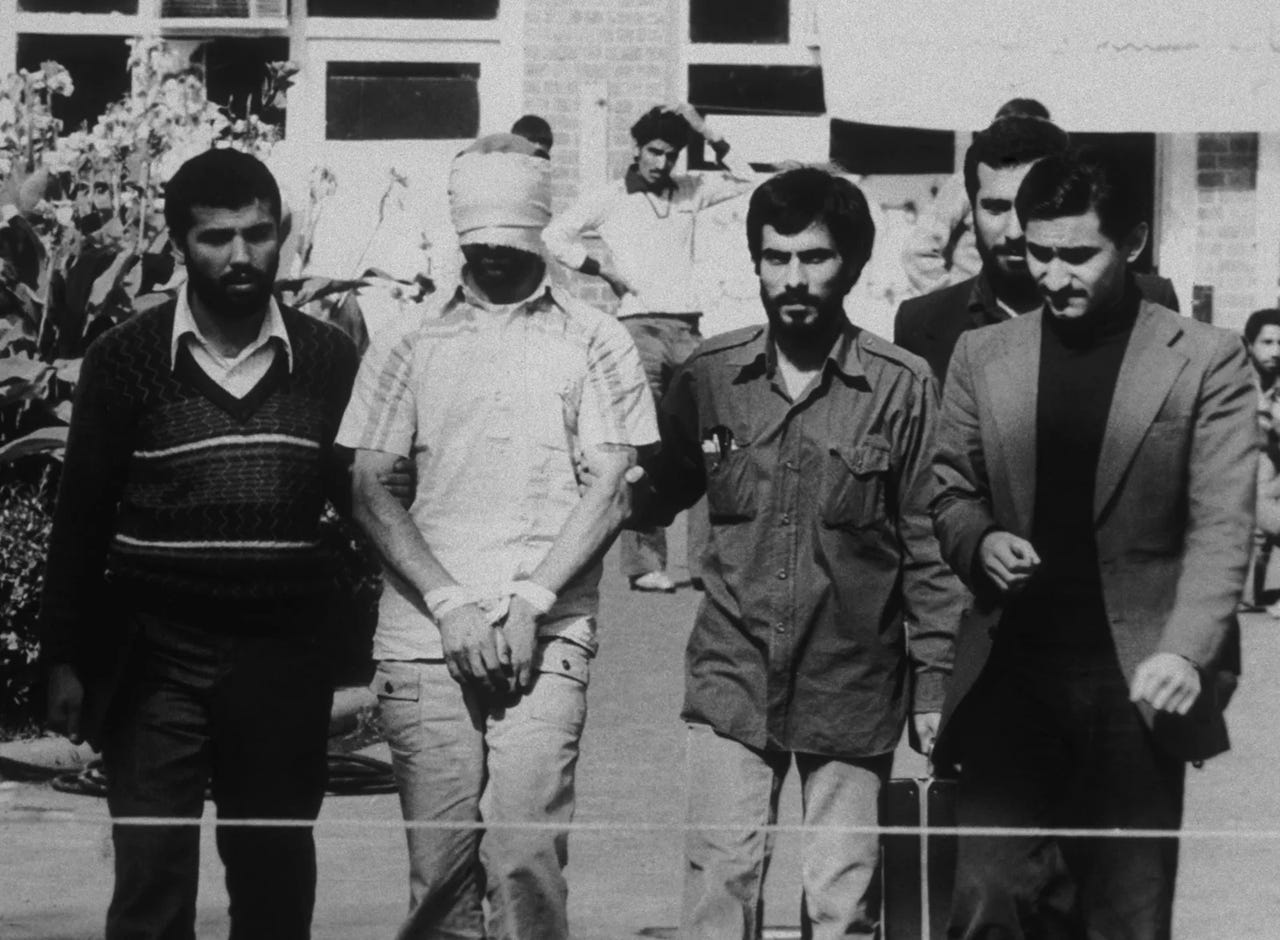
The 4 November 1979 takeover of the U.S. Embassy by the “Muslim Student Followers of the Imam’s Line” (MSFIL) is often said to have been provoked by President Jimmy Carter allowing Mohammad Reza Pahlavi, the deposed Shah of Iran, into the U.S. for medical treatment on 22 October, and this is criticised as a misstep by the U.S. that destroyed the possibility of salvaging relations with Iran under the new revolutionary government. The problem with this narrative on its face is the date: while it works in a superficial sense for the Embassy crisis a fortnight later, the more important antecedent question is why the Shah, who had needed treatment for more than half-a-year, was only granted access to it at that point.
The answer is that Carter, having contributed to the Shah’s political demise with his staggering incompetence and shameful refusal to properly support a loyal ally throughout the 1978 crisis, had then betrayed the Shah even after he had fallen. Carter told the Shah via the U.S. Embassy in December 1978 that he “would be welcome to come to the United States”, and then withdrew the offer in March 1979. Carter’s motive was to avoid antagonising those who had conquered Iran from the Shah, the gang of terrorists who were openly pledged to an anti-American program and were already at that moment slaughtering the men and women who had served the U.S.-allied Imperial Government. Carter’s behaviour was so disgraceful in forcing the Shah to wander the earth—from Morocco to the Bahamas to Mexico—in search of a place to die with a modicum of dignity that it made Henry Kissinger the humanitarian of the situation. Kissinger used his political leverage, threatening to withhold public support for Carter’s ludicrous SALT II agreement with the Soviets, to have Carter relent on the Shah getting medical treatment in America.
That context understood, it casts doubt on the whole premise that it was the U.S. that sabotaged relations with Revolutionary Iran by being too unwavering in its commitment to the Shah. And, indeed, on inspection, the reality is the reverse.
For one thing, the U.S. Embassy had already been stormed by the Islamic Revolution, on 14 February 1979, three days after the Islamist-Communist coup that had brought down the Interim Government left behind when the Shah departed the country on 16 January.1 On that occasion the “students” had withdrawn in short order, but clearly the revolutionary regime had the idea for an attack on the Embassy right from the start. The overarching motive for the second Islamist attack on the U.S.’s Iran Embassy in November 1979 was not that the Americans were being too hostile to Revolutionary Iran, but that progress towards some sort of Iranian-American accord was going too well.
