

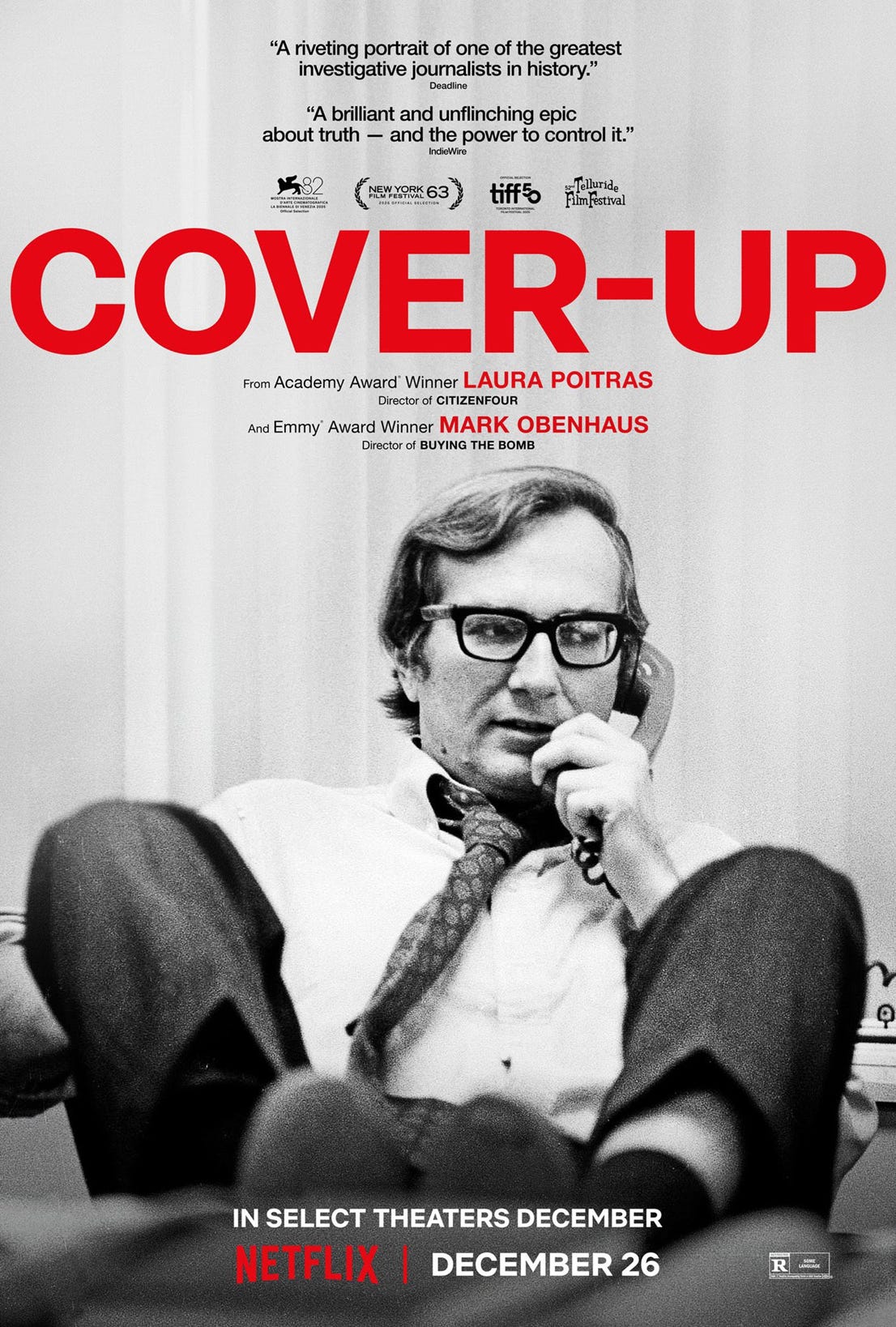
In December 2025, Netflix put out a documentary directed by Laura Poitras and Mark Obenhaus, Cover-Up, about the life and work of Seymour Hersh, the famous or notorious American investigative journalist.
No effort is made to conceal that the makers of Cover-Up are consecrated, long-term fans of Hersh. Indeed, part of the “story” of the documentary is that these devotees—Poitras, who has wanted to make a film about Hersh since 2005, and Obenhaus, who has been a collaborator with Hersh on three “investigative documentaries”—are finally being granted access to the great man and his archives, and he regrets agreeing to it. Hersh’s prickly demeanour is on display the first time we see him in the present day. Agitated about Poitras and Obenhaus seeing his files and exposing the names of his sources, Hersh says: “I barely trust you guys”. By later in the film, Hersh is having a meltdown and declaring: “I’d like to quit”.
This subplot aside, the film is structured as a series of case studies, shown to us using archive footage and present-day interviews, wherein Hersh, through guile and tenacity, exposes the truth about American wrongdoing, leading to a global media coverage and punishment of the villains.
To Poitras’s credit, Cover-Up is not the complete hagiography she produced in Citizenfour (2014), about Edward Snowden, the systems administrator at the National Security Agency (NSA) who enabled the most sustained assault on Western intelligence and defected to Russia in 2013. But the basic formula remains the same: the United States is presented—using genuine misdeeds, half-truths, and pure imagination—as a murderous rogue State, against which Poitras’s subject is a lone voice of truth and resistance, omitting where possible and spinning where not awkward elements in their biography to sustain this illusion.
An important element of this is bookending Cover-Up with stories Hersh reported on in 1968 and 2004. The first story, Vietnam, is self-evident, the natural starting-point since it is what made Hersh’s name. The second, Iraq, is potentially explicable in narrative flow and audience terms: it was objectively the biggest moment in Hersh’s career since Vietnam and it is probably the story he is best-known for among the younger Netflix-viewing segment of his largely liberal and Left-wing fan base, so it is a way of finishing on a high note. It is, however, somewhat jarring in a documentary that is otherwise essentially chronological—we get up to Hersh’s activities in the 2020s, and then it suddenly cuts back two decades. But the effect on the flow of the narrative is the least of it. What is most striking is what this arrangement conceals from the narrative.
The very brief section on the 2010s and 2020s alludes to the disquiet Hersh’s writings in this period have caused even among his admirers without getting into details. One such admirer wrote fifteen years ago of “Hersh’s recent turn away from the investigative reporting that made him famous into unsubstantiated conspiracy theories”, and this is now a widespread view of Hersh on the Left. Hastily changing the subject to Iraq, where Hersh is on the “right” side according to the politics of his supporters, prevents the issue of Hersh’s missteps narratively metastasising into questions that could complicate the image of Hersh the rest of the documentary has cultivated, and avoids concluding on downbeat note of Hersh “in decline”. Most importantly, since the film stresses Hersh’s consistency, it prevents the emergence of the dangerous question that would have torpedoed the entire enterprise: What if there was no “recent turn” and Hersh was like this all along?
From Cover-Up’s opening moments, in the vignettes it uses to set the scene for Vietnam, we get a sense of its approach.
Footage is played from a press conference with President Lyndon Johnson in November 1967, where he says the U.S. is making incremental progress in Indochina. The intent is clearly to show LBJ and the American government as delusional at best, and probably dishonest. But LBJ was correct. The U.S. prevailed militarily in Vietnam, then for political reasons abandoned what it had secured under the cover of a fake “peace” agreement, a recurring tendency in American policy.
A document is then shown, with the section reading, “Pentagon acknowledges that civilian areas in N[orth] Vietnam have been damaged during [bombing] raids”, highlighted. In combination with the clip of Hersh lamenting the “open murder in Vietnam”, it is meant to convey that the U.S. intentionally killed civilians in Vietnam, but that is not what it says. There are civilian casualties in war; even the invention of precision weapons has not changed that fact of life. But there were fewer civilians killed in the Vietnam War—which was spread over three countries (Vietnam, Laos, Cambodia) and nearly twenty years—than in Korea over three years. The two conflicts were strategically identical, with the U.S. defending an imperfect Southern republic from conquest by a Soviet colony to the North; it is objectively strange that the one waged more scrupulously is the one commonly regarded as inherently criminal. The kind of decontextualised propaganda Cover-Up engages in is a large part of the answer for why this is so.
The story Hersh reported on that made him famous was the My Lai massacre, a gruesome atrocity by a U.S. Army unit in a Vietnamese village on 16 March 1968. Perhaps 400 civilians were murdered, most of them women and children and old people. During the three-hour rampage, many other crimes, including rape and mutilation, were committed.
As Hersh tells it, he had just quit his job at the Associated Press—after a fight with the editor, of course—and received a telephone call from a friend with a source in the military, giving him a tip that there was an “atrocity in Vietnam that they’re covering up”. Discovering that the leader of the offending platoon, Lieutenant William Calley, was under house arrest on a barracks in Utah, Hersh went down there. While speaking to the commanding officer, Hersh could see Calley’s charge sheet on the desk and copied it down. Hersh then spoke to Calley, who claimed he had done nothing wrong: he had acted under orders and civilians had been killed incidentally in a fire-fight. Calley said his Captain, Ernest Medina, could vouch for him, and called him on the telephone, intending to get him to speak to Hersh. Instead, Medina said he did not know what Calley was talking about and slammed the receiver down, by Hersh’s account. Calley was ultimately convicted and imprisoned.
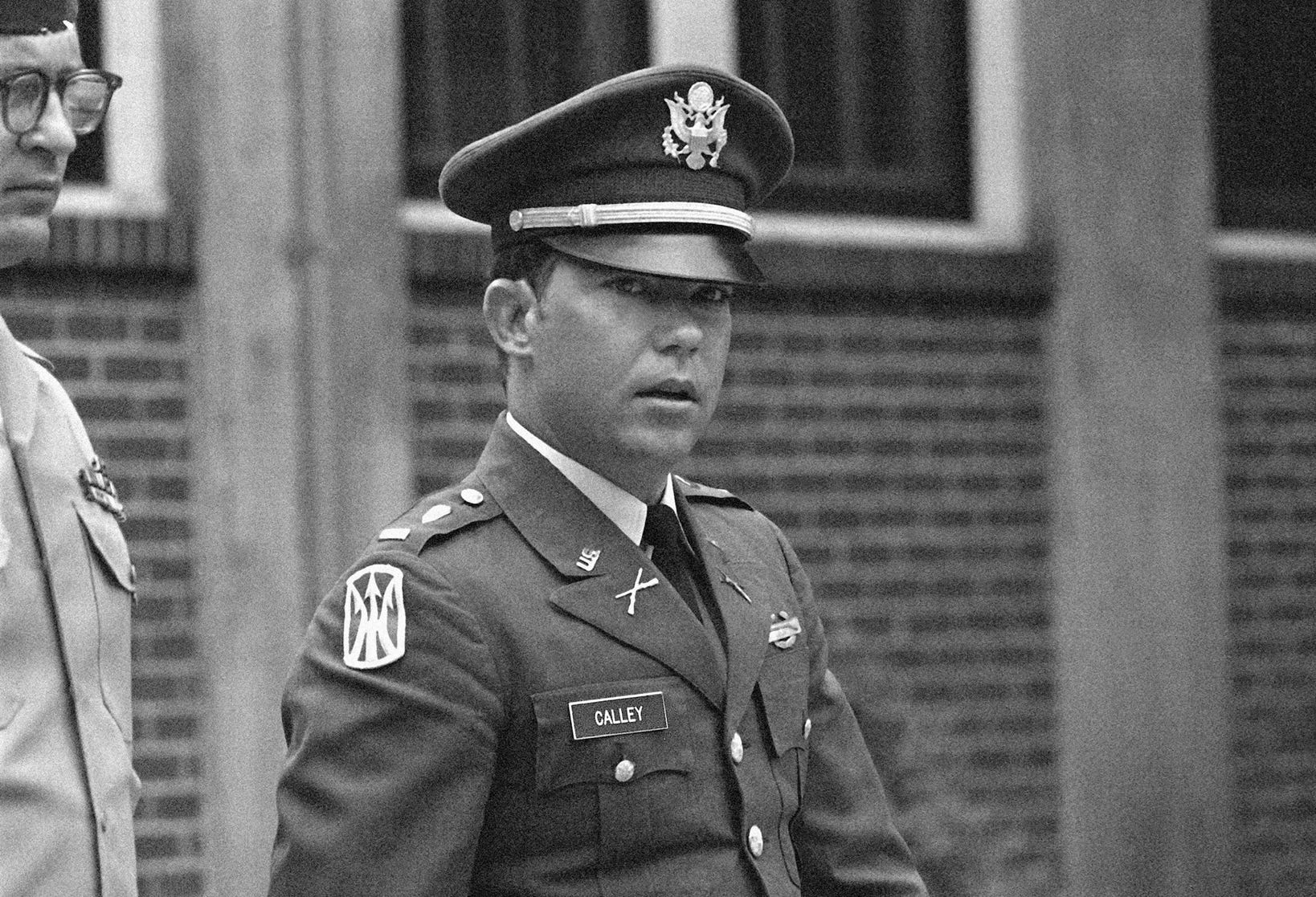
What surely leaps out from this story is that the U.S. military was already in the process of punishing the perpetrators at My Lai. Indeed, Hersh’s article in November 1969 in the Dispatch News Service, the one that changed his life, was made possible by the leaking of documents from this judicial procedure and by the testimony of officials involved in the investigation, which had been underway since March 1969 and Calley was charged in September 1969. So when Hersh says in the film, “After my story came out, the Army did an investigation” [emphasis added], he restates the fundamental lie on which his career has been built. Hersh did not alter the course of justice. What Hersh did was make the massacre public knowledge, transforming it into a global story the Soviet Union could utilise in political warfare to reinforce its onslaught against South Vietnam and the American troops trying to protect it.1
Hersh sees no problem with this: he advocates in Cover-Up for total press immunity from secrecy laws so it can publish anything it wants and boasts that while the Pentagon wanted to handle My Lai internally, “I broke that game up”. Fine. Most journalists would say Hersh was simply describing the job here. But Hersh’s “right” to do this, and whatever supposed benefits there were to the U.S. public knowing about My Lai, are clean different things to the claim that Hersh’s reporting was the only reason justice was done. Moreover, the gravamen of the My Lai saga is not the disclosure. It is what happened next, Hersh’s attempt to impose a larger meaning on it, which gets to the heart of the Hershian method—and which is most journalistically questionable.
There is “always another level”, Hersh says early in Cover-Up. “There had to be more”, he says of My Lai. This kind of thinking manifestly lends itself to poor journalism—to starting with a story and back-filling the evidence by credulously citing sources who say what you want to hear—and it is intrinsically vulnerable to degenerating into conspiracy theories, if every story must be bigger than it appears and sources saying it is will be believed.
Despite saying that Calley told him a tissue of lies in their meeting, Hersh decided to believe Calley’s claim he obeyed superior orders in My Lai, saying on a contemporary television program: “It raises the very real question: Were there really orders to shoot everything in the village? And if so, is this being done all the time?” Hersh moved swiftly from “just asking questions” to grand assertions that the Pentagon was lying when it said My Lai was an aberrational incident that said nothing at all about the U.S. Army. Hersh justifies this by saying he “kept on finding people” who told him a tale of an American “descent into madness” in Vietnam. In practice, what Hersh meant is he spoke to several of the My Lai killers who were keen to make the blame institutional, not personal.
One of these people was Michael Terry, whose hysterical comment to Hersh for his My Lai article—it was a “Nazi-type thing”—is highlighted in Cover-Up. What is omitted is that Hersh described Terry as a “witness”; only later was Terry forced, under the weight of evidence, to confess he was one of the killers. Another was Paul Meadlo, whose mother provided the quote that gave Hersh his headline: “I sent them a good boy and they made him a murderer.” Mrs. Meadlo had an obvious incentive to blame the Army, rather than accept she raised a bad man, and it was ideologically convenient for Hersh, so he acted as stenographer for this dubious assessment of the situation.
Two weeks after the article, Hersh coaxed Meadlo himself into an interview with Mike Wallace on CBS Radio, where he disclaimed any real responsibility by insisting Calley had forced him to shoot civilians. Cover-Up eschews the context that would have helped here. Calley’s orders, if we assume they were real, also applied to helicopter pilot Hugh Thompson Jr., who stopped the My Lai atrocity by threatening to shoot his own colleagues. Thompson played the part that was in his character, and Meadlo played the part in his.
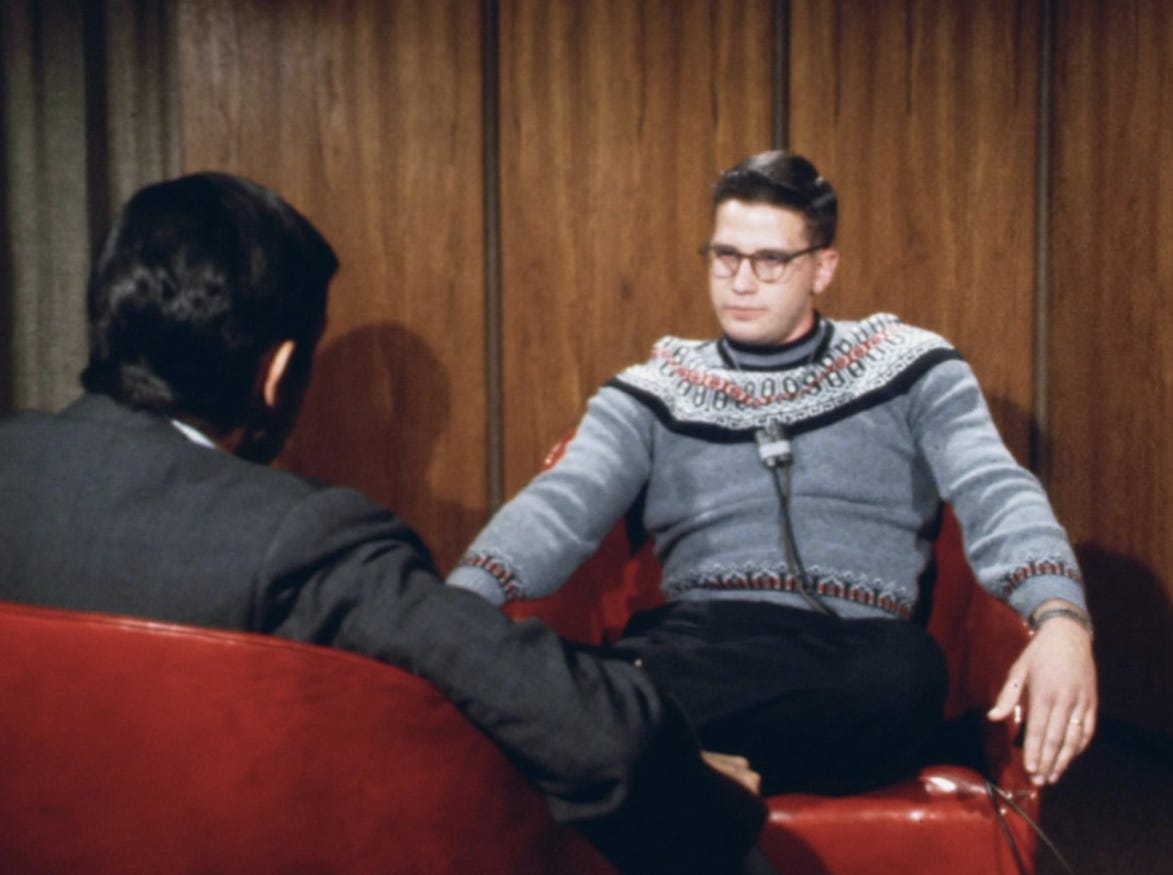
All this gave Hersh what he needed to transform My Lai into an indictment of America tout court: “We’ve been sort of committed to a program of almost at random murder, rape, et cetera [in Vietnam]”, said Hersh in a contemporary television interview shown by Cover-Up. “I think everybody just looked the other way, including the reporters who obviously must have heard about it, some of them.”
To build the argument that My Lai was not an isolated incident, Hersh ignores the hard evidence that acquitted Captain Medina and thus the U.S. Army command of any responsibility for the massacre, and foregrounds the fashionable speculation that the “body count” metric was not being used as a rough guide to who was winning the war, but as an encouragement to U.S. Army units to go around murdering civilians to meet quotas.2 More tangibly, Hersh drew attention to a second massacre on the same day, in the same area, which at least has the benefit of being true. U.S. forces killed about ninety civilians in My Khe, a couple of miles from My Lai. But again Cover-Up lives up to its name and we are denied context.
The impression is allowed to stand that two anti-civilian massacres in one day by the Americans in Vietnam was the norm. So, do we find a systematic pattern of atrocities by U.S. troops in 1968 and 1969? We do not. There is one murky incident on the U.S. side that killed a dozen civilians but probably was not a war crime, and two massacres by the U.S.-allied South Koreans, where the worst that can be said of the U.S. is that it did not pressure its ally sufficiently to punish these crimes.3
What further distorts the picture is that the enemy in Vietnam is virtually omitted from Cover-Up. It would be unfair to expect a biographical documentary to give a comprehensive history of the Vietnam War, but it could have given some sense of the nature of the conflict. As it is, those relying on Cover-Up could be forgiven for thinking there were no opposing combatants in Vietnam and the U.S. had waged a senseless genocidal war on civilians.4 Even if the documentary was to omit the generally atrocious campaign of the Communists,5 it might have given a modicum of perspective by referencing the slaughter of 5,000 or more people by the Communists at Huế a month before My Lai, an exterminatory operation carried out as a matter of policy, centrally planned and ordered from Hanoi.
Speaking of Hanoi, at the end of this section it is noted that Hersh went to the city for several weeks in 1972, but this is used merely a segue, since it was after this trip that Hersh was hired by the New York Times. It seems a shame this was not delved into. An interesting episode in itself, it could have been a mechanism to examine the enemy in Vietnam and Hersh’s views of same.
There is a short section giving a potted family history. Hersh’s parents are Jews from Poland and Lithuania, who got to the U.S. in the 1920s. Almost all their relatives who remained in the Old World were wiped out in the Nazi Holocaust. Then it is on to Watergate, his first Times story.
We begin with a recording of President Richard Nixon and Henry Kissinger, which the makers of Cover-Up obviously think makes Hersh look good because Nixon says Hersh is “probably a Communist agent” and Kissinger grovellingly assents (“Exactly. Exactly.”), when Hersh self-evidently was not. What caught my attention in the clip is that Nixon’s anger was because he believed Hersh was inventing a story out of “whole cloth”, and my prior is to assume Nixon was correct—or as good as. It could be that Hersh was being manipulated by “sources” using him in the venerable Washington way to wage bureaucratic-political warfare via fabricated “leaks” in the press. As Hersh himself said in a clip shown from the 1970s, “I give service to leaks”. The thought that followed was, “Like Woodward and Bernstein”, and, amusingly, within seconds Bob Woodward, the slave to his sources par excellence, was on screen giving the mythologised version of his Watergate reportage.
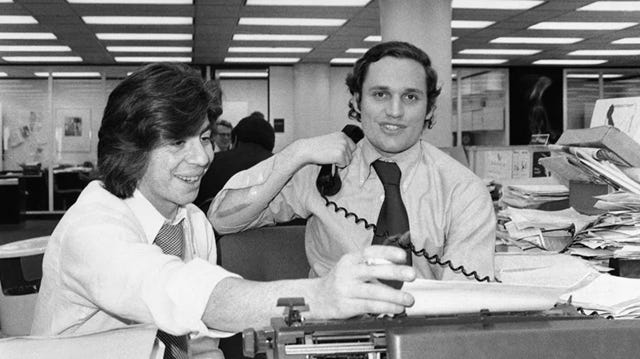
Hersh’s main contribution was a January 1973 report in the New York Times that four of the five Watergate burglars were still being paid. It does not seem to have moved the needle on the legal process investigating Watergate and it would be a stretch to connect it to Nixon’s resignation in August 1974. Nonetheless, it was genuinely impactful in reigniting the press clamour for stories about Watergate after a couple of quiet months since Nixon’s landslide re-election in November 1972.
There is a digression on Hersh’s methodology, and he candidly describes it as: “Amazing people talking to me”. How this investigative journalism differs from access journalism one might wonder, and one will continue to wonder because the question is not even posed. “Amazing” is an apt enough description for many of Hersh’s sources, though. “Incredible” would work, too, and this aspect looms larger and larger in the Hersh canon, as we shall see.
In late 1974, Hersh had two “scoops”. The first was a yarn contributing to the rich mythology that Kissinger was behind the military coup in Chile in 1973, a point of doctrine for Leftists who cannot accept that Salvador Allende undid himself by destroying the economy and democracy. Hersh is still a believer in the ‘American economic imperialism’ fantasy of General Augusto Pinochet’s rise, saying Allende was overthrown because he “nationalised copper mines that were owned by people who were big supporters of Nixon financially”. The second was a report on Operation CHAOS, a CIA operation that in Hersh’s outraged telling involved “spying on American kids!” What the Agency had been doing was investigating Soviet infiltration of the student and activist movements, a counterpart to the FBI’s much-maligned COINTELPRO (Counter-Intelligence Program).
The ostensible crime in the CHAOS operation is that the CIA is only supposed to gather “foreign” intelligence. The difficulty was that Communists recognised no borders and served an apparatus headquartered in Moscow, which is not exactly a “domestic” issue. Regardless, in the post-Nixon witch-hunt atmosphere about really all authority, but especially the intelligence services, the critics got their way. Hersh is given a lot of credit for these developments in the film. Cover-Up suggests, if not quite says, Hersh’s reporting caused the creation of the Rockefeller Commission into CIA “abuses” that led on to the even more politicised and vindictive Church Committee in the Senate. The 1970s Congressional reforms neutered the CIA under various forms of “oversight” and established “the wall” between the CIA and FBI, with 9/11 as the result. It goes without saying that Cover-Up has no comment on the lack of a public inquest into the KGB.6
When Hersh enumerates the anti-constitutional actions the CIA apparently engaged in, he lists “foreign assassinations, domestic spying, [and] mind control”. One of these things is obviously not like the others, and it was not a passing slip from Hersh. The “mind control” reference is to Project MKULTRA and Cover-Up expands on this considerably in a segment that doubles as a critique of James Angleton, the controversial CIA counter-intelligence chief, with whom Hersh clashed. Hersh says MKULTRA was about “trying to make a Manchurian candidate” and “reprogram somebody to be an assassin”. The reality of MKULTRA is rather more mundane, but it was exposed with the most sensationalist slant by the Congressional Committees, along with many other CIA programs: some “red team” exercises, some exploratory, some operationalised, and all of them fodder for the conspiracy theorists ever since.
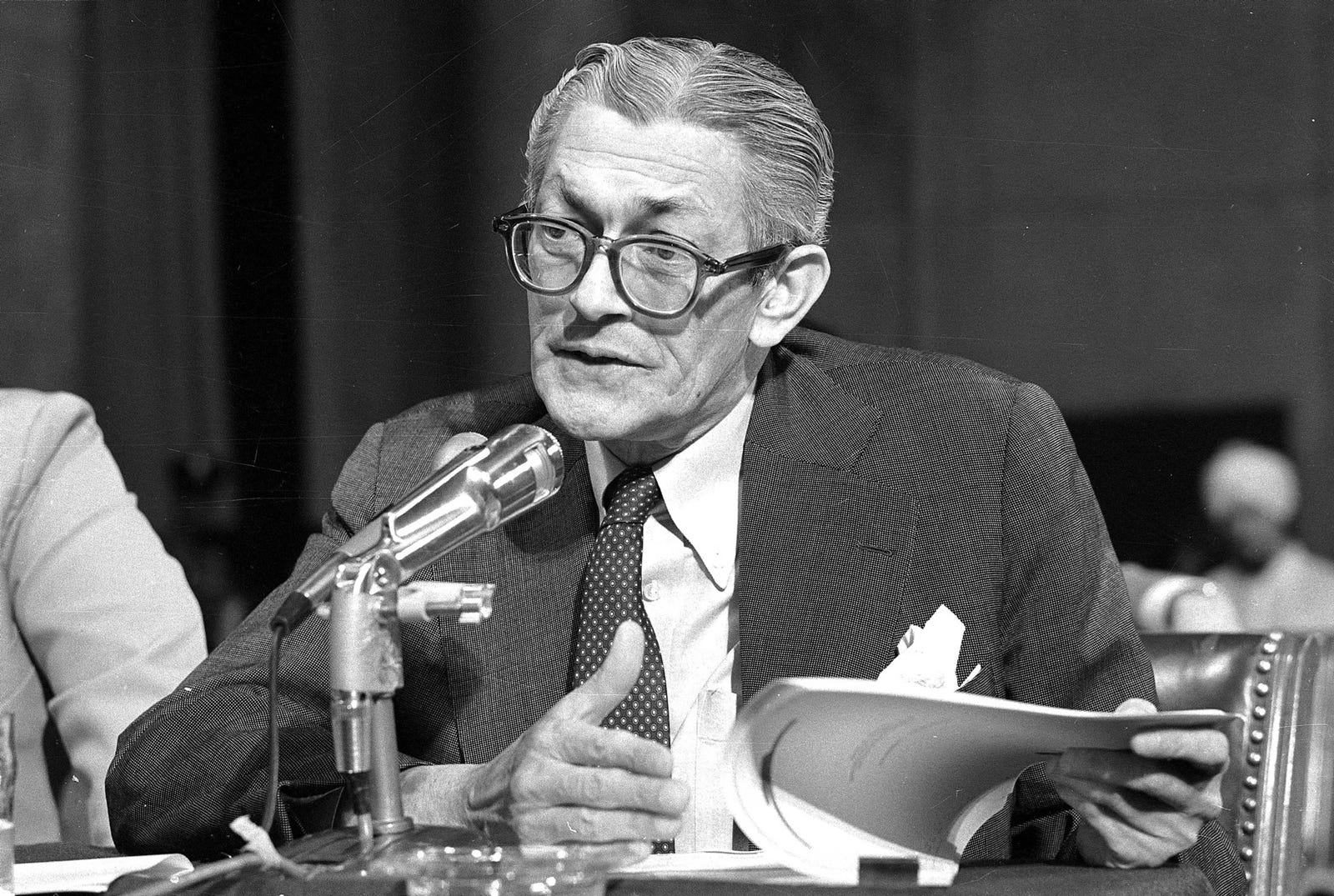
There is a moment during this part of the film where Hersh drops in an extraordinary claim about the death in 1953 of Frank Olson, a CIA officer involved in MKULTRA in its early days: “I have every reason to believe that was an organised CIA hit”. This is just left hanging; he is not asked why he thinks this or how he knows. Perhaps the evidence of suicide is too banal to countenance when there is “always another level”.
The take-home message Cover-Up wants from this section is that Hersh fearlessly confronting the rogue spies was the cause of the removal from office of Angleton, Defense Secretary James R. Schlesinger, and CIA Director William Colby. It is usually the Duke of Wellington who is credited with the line, “If you believe that, you’ll believe anything.” As Hersh reveals in his memoir, Colby was the source for the reporting on the “Family Jewels” document that compiled CIA operations judged retrospectively untoward. In other words, the story was, once again, of the American State self-correcting, and Hersh using the documentation of this self-correction to misrepresent America as a republic where systemic criminality goes unpunished.
Hersh rounded out his stint at the New York Times by working with Jeff Gerth to write about corporations, a subject he cheerfully admits he “knew nothing about it”. This curtain-raises a section where some criticism of Hersh gets an airing.
In 1997, four years after signing the contract, Hersh published a book on John F. Kennedy, The Dark Side of Camelot, which as the title suggests was not an admiring look at the 35th President. Hersh portrayed JFK as distracted from his duties by an uncontainable sex life, with this moral corruption entangling him in financial corruption with the mafia and the private recklessness leading to public policy recklessness, particularly foreign policy disasters like the Bay of Pigs. Even those who believe Hersh discovered real new material acknowledge that it was a “bad book”, filled with hearsay nonsense from people who could not know the things they claimed to know. Cover-Up does not focus on the book, though, but how it was put together, which brought Hersh as close as he has been to career destruction.
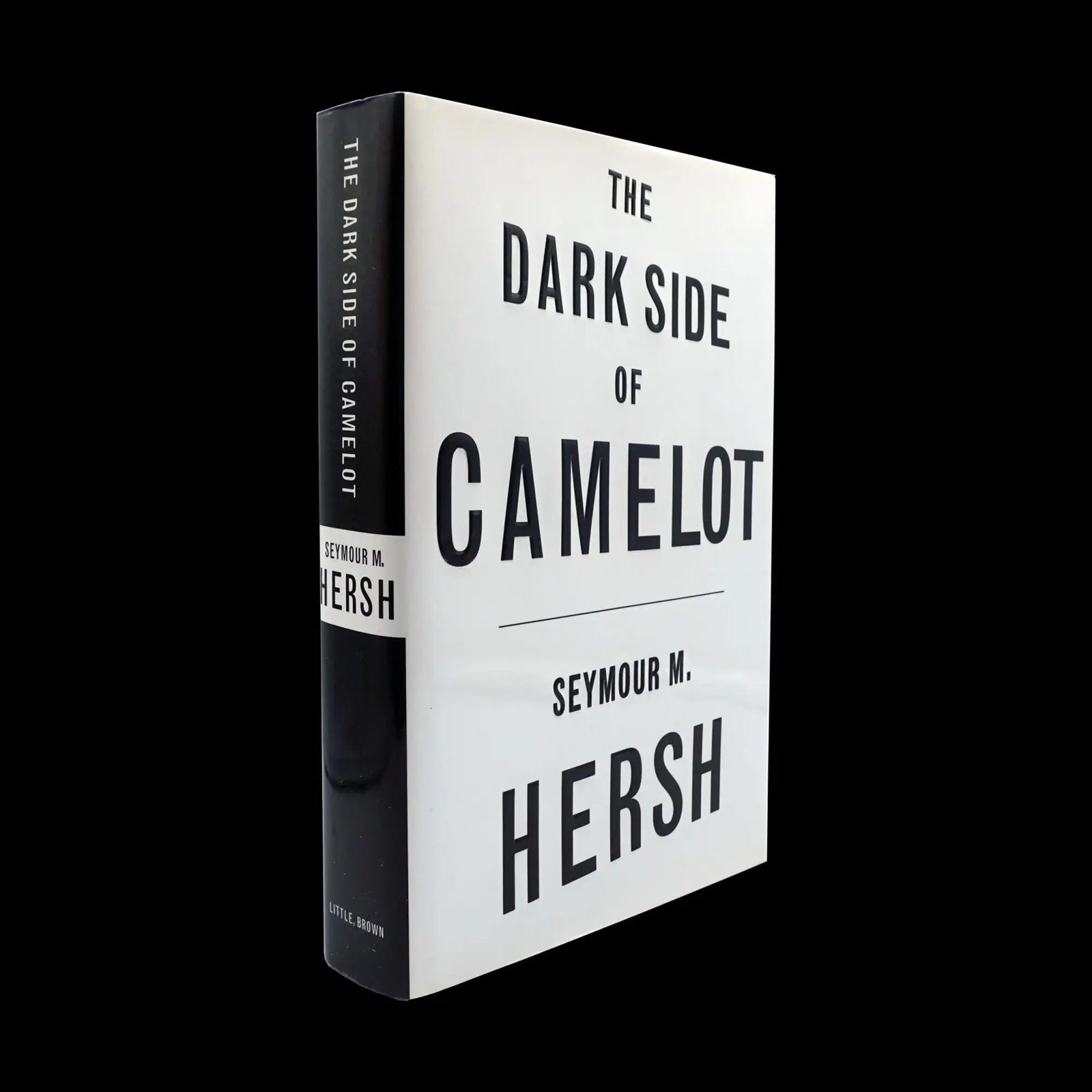
In the summer of 1995, Hersh signed an agreement with a source, Lawrence X. Cusack, for a tranche of Kennedy documents, among them letters testifying that Kennedy had had an affair with Marilyn Monroe, and a year later, to generate hype and publicity ahead of the book’s publication, Hersh (and Obenhaus7) made a deal with NBC News to produce a documentary based on the documents and interviews with some of the Kennedy-era Secret Service men Hersh had tracked down for the book. Filming started—then abruptly stopped. The documents were fake, as NBC (and ABC, which had been given some of them) realised almost immediately upon viewing them. This is elided in Cover-Up, but the documents were blatantly forged. One letter dated 1961 had a ZIP code, when ZIP codes were introduced in 1963. Another letter from Kennedy was written on a typewriter invented eight years after Kennedy was murdered.
In Cover-Up, Max Friedman, a research assistant of Hersh’s, offers the defence that, while Hersh had “maybe talked to too many people about these [forged] papers” and started including material from them into his manuscript, he took the fake stuff out before he published the book. Small mercies. Hersh himself at the time said in an interview that he felt like a “dupe”, yet he was also “relieved because it cleared up a whole number of impossible to reconcile issues”. Hersh does not seem to realise the gravity of this confession: he had discovered glaring contradictions in his sources, but he did not have an acute enough sense of the historical method—and did have too much of a story he wanted to tell—to see what these contradictions meant. In the present day, Hersh says: “The fact that they [the documents] weren’t true, that’s just part of the process”. But it was not part of his process, the key point Cover-Up obfuscates. It was NBC and ABC who detected the forgery Hersh was desperate to believe.
For all the deficiencies of Cover-Up’s handling of Hersh’s “Marilyn papers” fiasco, it is the section containing my favourite moment of the whole film. Amy Davidson Sorkin, a fact-checker at the New Yorker, where some of Hersh’s best-known work has been published,8 is brought in and wonderfully remarks: “It was definitely a cautionary tale for journalism, but also for Sy and his strengths, and his things that maybe are not necessarily strengths”. I don’t think she was trying to be laugh-out-loud funny, but she accomplishes it all the same.
In February 2023, Hersh published his first article on Substack, which asserted, on the word of an “unnamed source”, that the U.S. Navy sabotaged the Nord Stream pipeline in September 2022, and that the administration of President Joe Biden began planning the operation in December 2021, three months before Russia’s all-out invasion of Ukraine. Moscow was initially suspected; evidence pointing to a Kyiv false-flag emerged as early as March 2023 and has grown since then. What there has never been any evidence for is U.S. responsibility, the accusations of the Russian government and Hersh’s source notwithstanding.9 Asked about this in Cover-Up, Hersh looks and sounds confused, and gets very defensive. “Even if there’s nine sources, sometimes it’s much better just to make it one”, Hersh says, giving some half-baked “security” reason. A clearly flabbergasted Poitras asks Hersh how he can say this: What if the single source is wrong? “Then”, says Hersh, “I’ve got twenty years of working with the guy that I’ve been wrong on.” Hold that thought. (It is just after this Hersh says he wants to quit.)
If the Ukraine section contains the sole moment where Hersh is challenged in the film, it should also be noted that it is yet another instance where context is removed. Cover-Up chose the Hersh story on Ukraine where genuine uncertainty remains. It omitted the flagrantly false Hersh story two months later, citing “one knowledgeable American intelligence official”, to accuse Kyiv of buying fuel from Russia and Ukrainian President Volodymyr Zelensky of stealing “untold millions” of American dollars in a complex corruption scheme
Ninety-odd minutes in, we get to Syria. Hersh pronounces himself “shocked” at how quickly Bashar al-Asad fell (weren’t we all). Hersh says, obliquely, “I wrote stories for the London Review [of Books]. There were reports that Asad nerve gassed his own people. I saw him two or three or four times, and I didn’t think he was capable of doing what he did, period. And let’s call that wrong. Let’s call that very much wrong.” Asked if this was “an example of getting too close to power”, Hersh says: “Of course”. Hersh goes on: “The human rights people were all over him. I never thought he was Mother Teresa, but I thought he was okay. But if I have made a claim in prior interviews to be perfect, I would now withdraw it. That’s all. I wasn’t perfect.” And with that, after just about one minute, the Syria file closes, and we move on to Iraq in 2004.
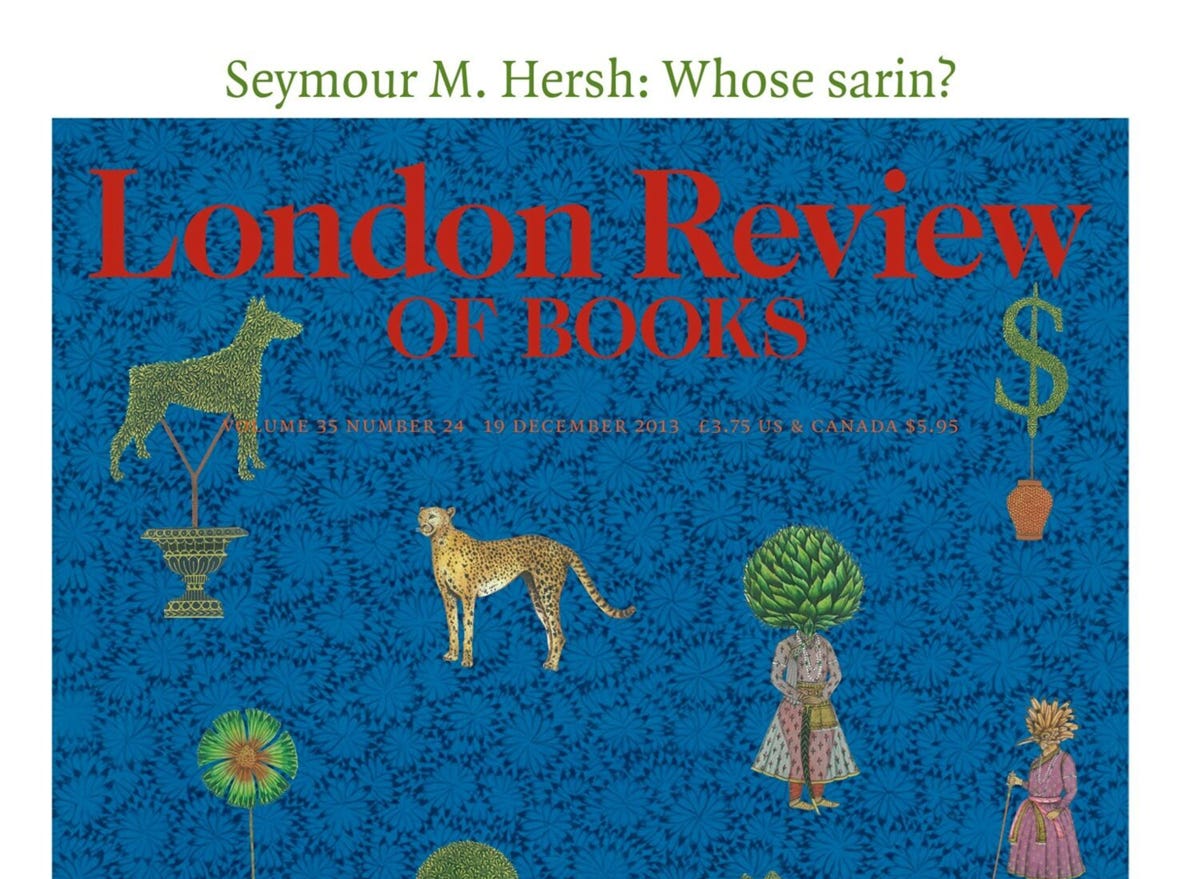
When Hersh spoke about the LRB pieces, the magazine cover image of one—“Whose Sarin?”, from December 2013—flashes up on-screen (see above), but it would be easy to miss the headline at the very top of the page, and even if viewers do see it, unless they already have the background knowledge, it is going to be meaningless. For those who do not know: Hersh heavily implied, channelling his “sources”, four months after chemical weapons of mass destruction were used to kill hundreds of people in Damascus, that the Syrian insurgency had gassed itself and its supportive population. In April 2014, the LRB published another Hersh article, this one more forthright in claiming that Syria’s insurgents—with the connivance of Turkey—had carried out the poison gas attack to provoke Western intervention against Asad, and President Barack Obama had faltered on his “red line” in August 2013 because he knew the intelligence picture was more complex than he let on in public.
This was not a one-off mistake. This was two five-thousand-plus-word articles over four months. How did this happen? Who were the sources (in outline, obviously; not their names)? Why did he believe these sources over the public U.S. intelligence assessment and the copious open-source evidence—photographs, videos, testimony—from the “first YouTube war”? Did he vet the sources in a way that differs from what he usually does? We do not even discover what he thinks now in any serious sense. Does he at this point accept his sources were wrong? If so, does he think they lied or were mistaken? And does he wish for the LRB articles to be retracted?
These questions are never asked, and this whole “critical” section—which lasts about fourteen minutes—is like this. We get no genuine answers from Hersh or insight into what has led him astray, which seems to be the point: to go through the motions of self-criticism for the sake of form, but not to actually leave any black marks against Hersh’s name. The Syria segment is only the most egregious, and likely the most effective. It would be staggering if even half the viewers of this documentary have any idea what is going on during that minute.
The Iraq story is Abu Ghraib, and it is almost precisely My Lai redo. In early May 2004, Hersh reported for the New Yorker on the revolting torments inflicted by a group of U.S. Military Police (MPs) on detainees at a prison in Iraq. The story was based on the documents produced by the U.S. military investigation that had begun in January 2004, specifically the Pentagon’s Taguba Report,10 reports from the Army Criminal Investigation Division, and the sworn statements of witnesses. The U.S. was already in the process of delivering justice. All Hersh did was make this public so the enemy could make use of it—the enemy in this case being the Islamic State movement. Within the month, Hersh was trying to work up these gruesome individual acts, the kind of thing that happens in every war, into a charge of institutional and systematic criminality against the United States.
Cover-Up relates how the dissident Hersh pressured the Establishment CBS 60 Minutes show into running their story on the Abu Ghraib crimes on 28 April 2004. CBS had initially acceded to a Pentagon request to delay publication and Hersh threatened to scoop them. The attempt to present Abu Ghraib as resulting from intentional U.S. policy—by linking it to the “torture” techniques authorised against Al-Qaeda captives after 9/11—is oddly elliptical and weak. The reason is presumably that if Cover-Up had zoomed in on the details, it would have been quite plain that what happened at Abu Ghraib was recreational cruelty led by a couple of determined sadists, unconnected to any effort to elicit information. The film managed to get Antonio Taguba himself on for an interview, where all he says is how “angry” he was about what happened and that there was some suspicion he had leaked his report.
The most time in this ten-minute section on Iraq goes to Camille Lo Sapio, the “anonymous source” who responded to Hersh’s radio appeal—he literally gave out his mobile telephone number—and provided him with the photographs the criminal MPs had taken of their handiwork. Hersh claims there would have been “no story” without the photographs, which is implausible, though doubtless in a decreasingly literate age such as ours pictures helped spread and sustain the story. Hersh’s claim, apparently sourced from an officer in the Iraqi Army, that people were rounded up at random and sent to be tortured at Abu Ghraib is simply false, as his claim that “children were being [sexually] assaulted” at the prison. There is no evidence of this in the thousands of photographs, and none of the reports, official or journalistic, contain even rumours of such a thing.
Throughout the Iraq portion of Cover-Up, there were clips played of Americans on radio and television phone-in shows being angry at Hersh for his Abu Ghraib reporting. The message is how brave Hersh is to stand for truth against the tide of jingoism, and this is the theme of the last few minutes, harking back to the My Lai days, an apparent nod to the near-perfect symmetry between the two stories.11 We see radio stations playing “The Battle Hymn of Lt. Calley”, a country song from 1971 suggesting that Calley had been betrayed while fighting for his country. Hersh expresses some displeasure at the length of Calley’s prison sentence. And then Poitras asks why, in the face of all this opposition, he carries on. Hersh says: “You just can’t have a country that does it and looks the other way. If there’s any mantra to what I did, that’s it.” We close out with a message on-screen reading: “Dedicated to all those killed and denied justice, and those who resist, past and future.”
I mentioned several times above in the various case studies that what was most wrong with the presentation was not anything said, but the stripping of context, and one can apply that as a meta-criticism. Of all of the defects in Cover-Up—the slant and distortion, the half-truths and untruths—the most serious problem with it is what is not present. One can argue it is disreputable to do a film about Hersh’s life and work that all-but avoids the last fifteen years, when even some of the old comrades have questioned in public whether Hersh still has both oars in the water. It is straightforward malpractice to make space (barely) for the Syria and Ukraine cases in a survey of this period, and leave out Hersh’s May 2015 article in the London Review of Books questioning the “official narrative” of the U.S. raid that killed Usama bin Laden four years earlier.
With “a retired senior [U.S.] intelligence official” as his “major” source, some “information from inside Pakistan”, and two “longtime consultants to the Special Operations Command” providing splashes of colour, Hersh contended that Bin Laden’s demise was an act of theatre disguising the “premeditated murder” of “an unarmed elderly civilian”, as his primary source puts it. The raid was not the result of a decade of U.S. intelligence work and the Navy SEALs on the night did not have to dodge Pakistani defences, wrote Hersh. Rather, Pakistan’s Inter-Services Intelligence (ISI)—the controllers of the jihadist insurgency in Afghanistan—had sold out Al-Qaeda’s leader, who was living on the dime of the Saudi Kingdom he had affected to war against for a quarter-century. Usually, when the ISI wants to trade in one of its jihadist assets for American favour, it simply arrests them and hands them over. For reasons Hersh felt need not concern us, the ISI decided in 2011 that its interests would be best-served by enabling an American raid that made it look incompetent, on a location a stone’s throw from its premier military academy so the whole world would know Aabpara harboured Bin Laden.
The Bin Laden piece was undoubtedly Hersh’s most impactful story in this most recent phase of his career. It was all over the American networks, made it to the BBC in Britain, and as far away as the ABC in Australia. But the mainstream press that usually receives Hersh missives with reverence reacted harshly to this one. It was at this time former doting disciples started writing of Hersh going “off the rails”. The outraged confusion of Hersh’s die-hard supporters among the radical “anti-imperialists” to this press treatment of their hero was wholly justified, because Hersh had done nothing out of the ordinary in using cranky “sources” to concoct a deranged anti-American fable. What had changed was the political consensus of Hersh’s target audience. With Obama as President, not Nixon or George W. Bush, dubious and conspiratorial accusations of criminality against the U.S. government were much less welcome on the American Left.12 This was the cause of such pushback as there was on the Syria stories, and Biden was in office over Ukraine, a cause in any case ubiquitously popular beyond the fringes.
Had Cover-Up included the Bin Laden raid imbroglio, one could easily see it presenting just such a defence, of Hersh holding to his principles while all around him surrendered to partisan exigency, and pointing concretely to the New Yorker, which took a pass on the Bin Laden piece,13 despite repeatedly publishing Hersh in the mid-2000s when he used exactly the same methods and standards to foretell an imminent American war against the Islamic Republic of Iran. The magazine’s vaunted fact-checkers waived through claims no more outlandish and no more sourced than those in the 2015 article, including that Vice President Dick Cheney and the dreaded “neoconservatives” were planning to initiate the Iran war with a false-flag and that the Bush administration was considering using “tactical nuclear weapons” on Iran. Tellingly, as late as 2012, Hersh was publishing unsubstantiated claims in the New Yorker about shady U.S. policies towards Iran—that dated back to the Bush administration.
One can just as easily see why Cover-Up drew a veil over the entire business. It is greatly to the credit of Poitras and Obenhaus that they avoid this narrative of a Hersh “decline”, which is basically a mechanism for those who like his work on Vietnam and Iraq especially, and Watergate, Kissinger, and the CIA, to keep all of that, and firewall it off from the later work they do not like. The Iran stories of the 2000s, written in the same period and venue as the Abu Ghraib pieces, make nonsense of this idea. But the premise of total Hershian continuity in method and motives needs very careful curation if the resultant picture is to be a positive one. Syria and Ukraine as two isolated missteps ten years apart is bearable. The preposterous Abbottabad raid story is not. It could contaminate Hersh’s oeuvre on its own, and defending it on business-as-usual grounds would almost certainly create more scepticism about all of Hersh’s other work than it would converts to his Bin Laden tale.
Equally unbearable would be giving any sense of the true range of Hersh’s reporting disasters. In 2008, Hersh claimed (in the New Yorker) that Israel’s Operation ORCHARD had not demolished a nuclear-weapons site in Syria months earlier (he was hazy on what was hit and speculative on why). Hersh’s 1991 book said inter alia that Israel targeted Soviet cities with nuclear weapons and passed U.S. intelligence to Moscow, these contradictory claims sourced to Ari Ben-Menashe, a con man who “lies like people breathe”, according to none other than Hersh. Hersh’s 1986 book claimed the poor Soviets had been viciously smeared for massacring the 270 civilians aboard Korean Air Lines Flight 007. Hersh’s false accusation in 1983 that Indian Prime Minister Morarji Desai was a CIA agent ended up in court. Hersh was author of “the longest correction ever published” in 1981 for the New York Times, confessing his error in claiming former U.S. Ambassador to Chile Edward Korry had been involved in coup-plotting against Allende. It is not simply that the more errors Cover-Up had shown, the less reliable Hersh would seem. It is that when the errors are stacked together, it discloses something more than ineptitude: the errors all go in one direction.
At the present time, criticism of the use of “anonymous sources” tends to either insinuate or explicitly claim that those sources do not exist, and the journalist in question is a fabricator, telling a story they want to tell and pretending it was told to them by others. The problem with Hersh is narrowly distinct. Arthur Schlesinger’s remark during the public debate about the Kennedy book, that Hersh is “the most gullible investigative reporter perhaps in American history”, is often quoted by critics, and rightly so. But it is important to give the second half of that quote: “He will believe anything so long as it discredits John Kennedy.”14 Mutatis mutandis, this is the Hersh method distilled. Hersh’s is a willed gullibility. Hersh’s sources do the fabricating and he believes them, or affects to, if what they tell him supports the ideological narrative he is constructing. Any connections to reality in the articles generated by this methodology are accidental.
FOOTNOTES
The Soviets also owed thanks to Ronald L. Haeberle, the Army photographer who captured the images of the aftermath in My Lai and then sold them for a large amount of money to the newspapers.
“Free-fire zones” were another popular talking point in “anti-war” circles that took for granted American troops were wantonly killing scores of Vietnamese civilians.
In February 1969, a U.S. Navy SEAL team entered Thanh Phong in search of a Vietcong leader, and was ambushed. When the smoke cleared, it transpired thirteen civilians had been killed in the return fire. This became a political issue for the squad leader, Bob Kerrey, because he was a Senator when it came out, but it is doubtful it is a legal issue. In February 1968, South Korean troops massacred about 75 civilians in Phong Nhi and 135 civilians in Ha My. South Korea, then-under military rule, denied all. Since the transition to democracy, the issue of State responsibility has become a live one in Seoul.
There truly is nothing new under the sun.
The Communist strategy was based on terror, a relentless campaign of gruesome atrocities intended to make life in South Vietnam impossible: assassinating local officials and priests, blowing up schools and hospitals, scattering booby traps, random kidnappings and torture just to intimidate areas, beheading villagers who “collaborated” with the government by going to work, and wholesale massacres.
The KGB was the backbone of the totalitarian system and had taken control of Soviet foreign policy by this point, engaging more extensively and deeply than the CIA ever did abroad, including in countries like Cuba and Chile that enthralled Western radicals. The CIA stood accused before the world of all manner of “illegal” activity. The Agency had at no point been outside lawful Presidential instructions, but that hardly mattered. The impression of CIA malfeasance stuck, while the KGB, which actually had done everything the CIA was accused of and worse, basked in the silence that lawless despotism imposes on critics, and the Centre got to work instrumentalising the materials produced by the West’s self-flagellation to abet its sleepless mission to bring the world into conformity with History.
Weirdly, Cover-Up makes no mention of the proposed film on Kennedy that Hersh and Obenhaus were set to do for NBC, but it does include a clip from an unaired interview that would have been in the film, with Joseph Paolella, a former Secret Service agent, and at the beginning of the clip there is a clapperboard with Obenhaus’s name very visible as “cameraman”. To that extent the doomed NBC film and Obenhaus’s role in it are technically included in Cover-Up. Other than to be able to say that, it is very unclear what is going on here.
Hersh was first published in the New Yorker in 1971, and was a regular there from 1993 to 1998, and 2001 to 2012.
There was a certain amount of patriotic pride to be had in some of Vladimir Putin’s henchmen blaming Britain for being behind the Nord Stream bombing. Sadly, this testifies only to the political illusions that continue to operate in Russia and a few other countries, the legacy of a bygone era, bearing no relationship to Britain’s actual place in world affairs at the present time.
Completed on 3 March 2004 by Major General Antonio Taguba, the Deputy Commanding General for Support of the Coalition Forces Land Component Command, based in Kuwait.
Assuming that is the intent. If so, it is curiously indirect, though perhaps it is meant to adhere to the rule of show-don’t-tell.
Back in the halcyon days of 2005, liberal journalists were willing to say on the record that they knew perfectly well Hersh’s reporting was often wrong—and his verbal presentations, on television and in lectures, were self-admitted to be exaggerated and worse—but this was all fine because Hersh’s political effect, in damaging President Bush and the Iraq War, were desirable.
The New Yorker also passed (as did the Washington Post) on Hersh’s first Syria article in 2013. Hersh does not seem to have offered them the second one.
‘Did Camelot Have a Dark Side?’, Firing Line with William F. Buckley Jr., 13 January 1998. Available here (04:45).